Northern Arizona · September 7, 2026 · By Shannon Roberts
Sedona vs. Flagstaff: Where Should You Stay?
Compare Sedona and Flagstaff by weather, hiking, families, Grand Canyon access and trip style—and see when another Northern Arizona base wins.
Stay in Sedona if red-rock scenery, trail access, resorts, spas and a vacation-town atmosphere are the point of the trip. Stay in Flagstaff if you want cooler summer weather, a walkable downtown, ponderosa forest, dark skies and a more practical base for a Grand Canyon day trip.
That is the short answer. The more useful answer is that neither town wins every trip.
I first visited Sedona in 2010, moved to Arizona in 2011 and later lived in both Sedona and Flagstaff. I have also lived in the Phoenix area and Prescott Valley, raised children here, photographed this part of the state and driven the routes between these places more times than any vehicle should be expected to discuss publicly. That longer story is in what living all over Arizona taught me.
Sedona and Flagstaff are close on a map, but they create completely different vacations. Sedona sits around 4,500 feet among red rock. Flagstaff sits around 7,000 feet in ponderosa forest. That elevation difference changes the weather, the landscape, what you do before breakfast and whether you packed the correct jacket.
This guide will help you choose between Sedona and Flagstaff—and recognize when the Verde Valley, Williams, Tusayan or a split stay is the smarter answer.
The quick answer: Sedona or Flagstaff?
Choose Sedona for iconic red rocks, hiking, romantic trips, spas, resorts, galleries and scenery that begins outside the hotel. Choose Flagstaff for cooler summers, snow trips, families, downtown restaurants, breweries, astronomy and easier access to the Grand Canyon South Rim. Choose the Verde Valley for Cottonwood, Clarkdale, Jerome, wine, history and a slower trip outside Sedona’s busiest orbit. Stay near the Grand Canyon if sunrise, sunset, a major hike or more than one park day is central to the trip. Split the stay when Sedona and the Grand Canyon are both non-negotiable. Two intentional bases are often better than one exhausting commute.
If you would rather answer five questions than read several thousand words about my relationship with Interstate 17, use the Northern Arizona Trip Matcher.
Sedona vs. Flagstaff at a glance
Best scenery built into the stay: Sedona
Best summer home base: Flagstaff
Best for a Grand Canyon day trip: Flagstaff
Best when the Grand Canyon is the entire point: Grand Canyon Village or Tusayan
Best for resorts and spas: Sedona
Best traditional downtown: Flagstaff
Best for a romantic trip: Sedona
Best for families who want variety: Flagstaff
Best for red-rock hiking: Sedona
Best for forest trails and astronomy: Flagstaff
Best lower-key alternative: Cottonwood or Clarkdale in the Verde Valley
Best answer for four or more nights: Often a split stay
The winner changes by season and by what you plan to do. Anyone declaring one town universally superior is either selling something or has not been trapped behind enough weekend traffic.
Choose Sedona when the red rocks are the reason for the trip
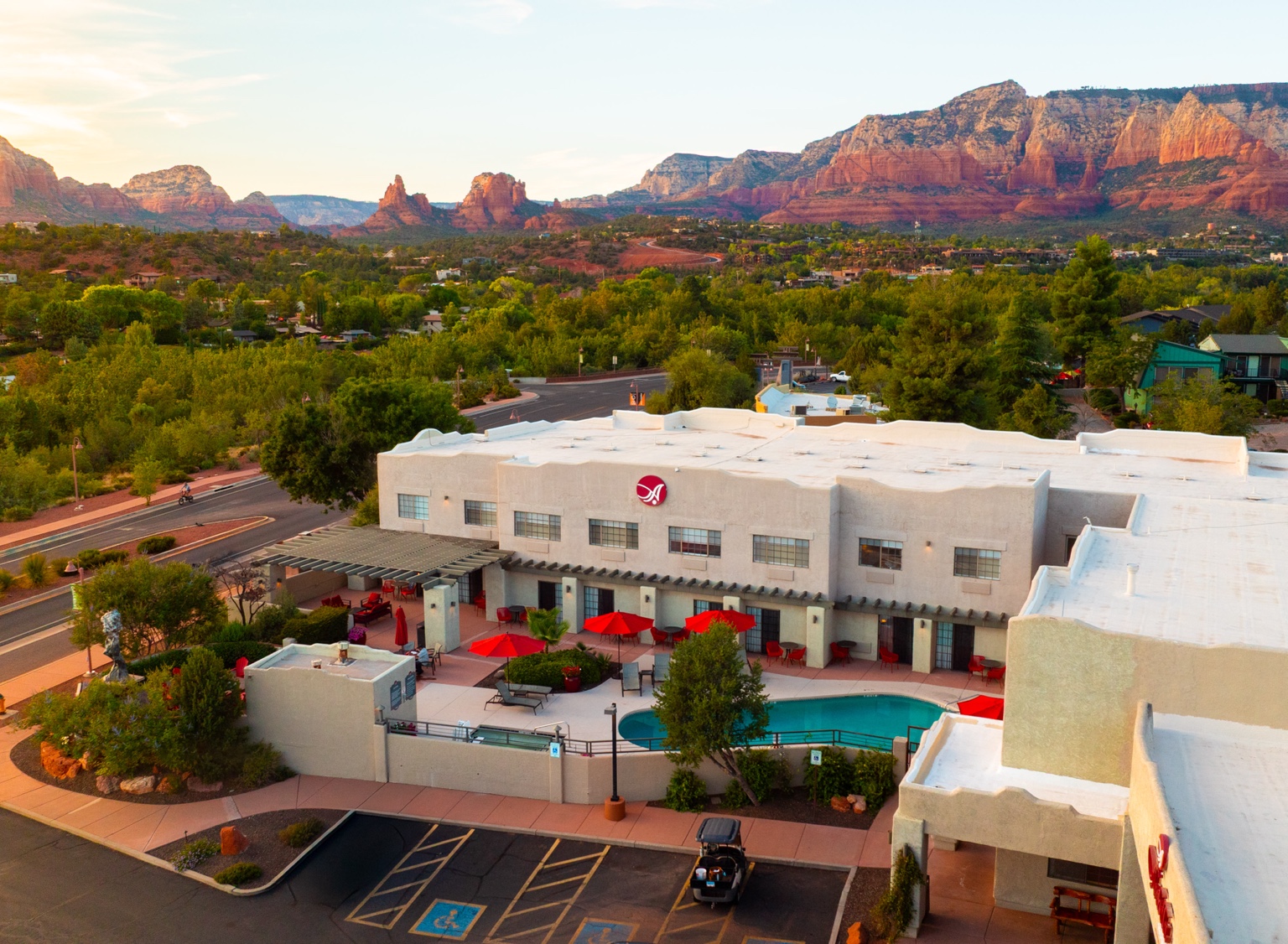
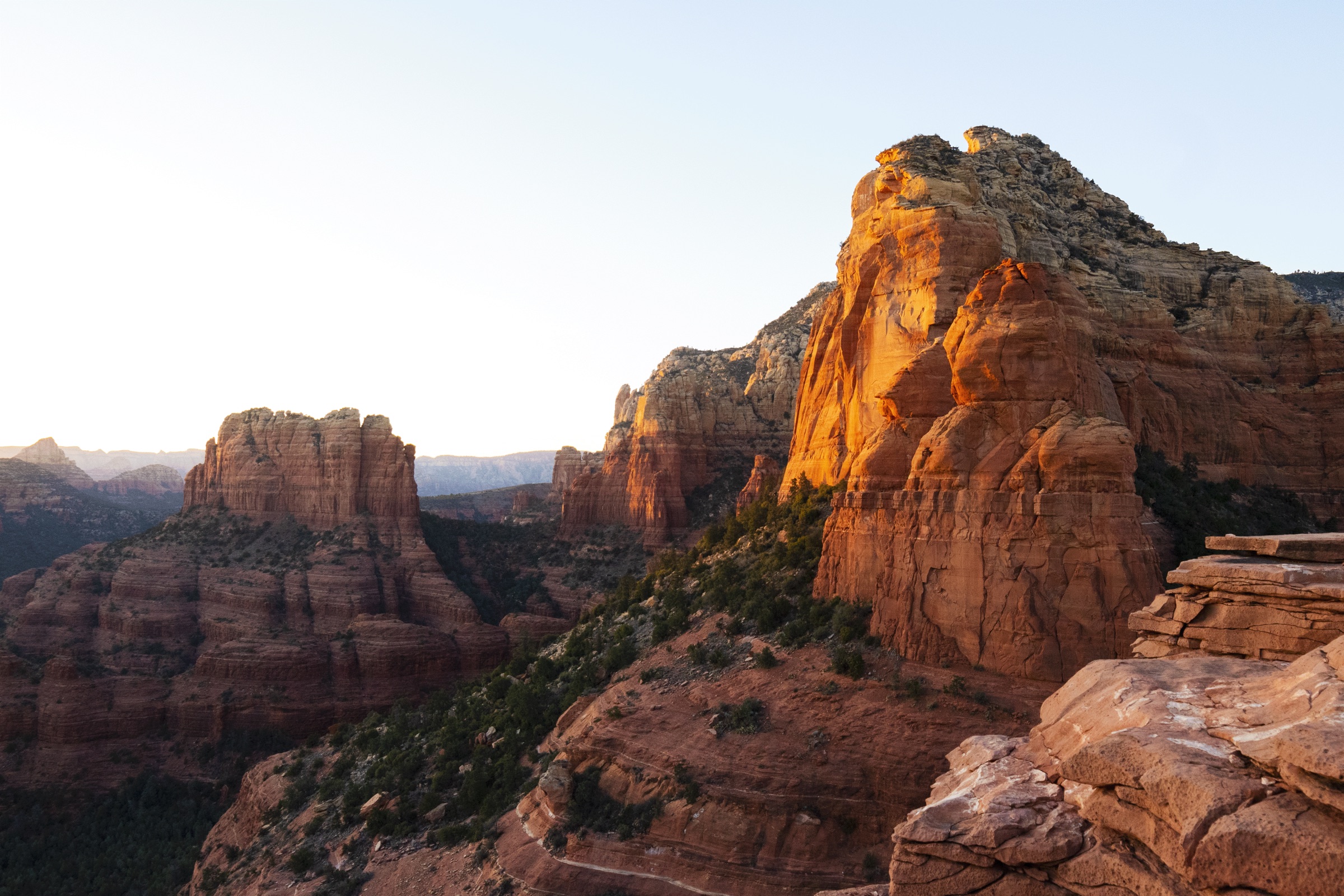
Sedona is the easy answer when the landscape itself is the attraction. You do not have to drive an hour to reach the scenery. The formations appear along the road, behind restaurants, beyond hotel balconies and through the windshield while everyone in the car begins pointing at different things.
Choose Sedona if you want to build the trip around:
Red-rock trails and scenic overlooks
A couples trip, honeymoon or anniversary
A resort or spa experience
Photography at sunrise and sunset
Jeep tours, galleries and guided outdoor experiences
Restaurants and non-hiking activities close to the scenery
A first Northern Arizona visit where visual impact matters most
Sedona also works better than people assume for travelers who do not want a hiking-centered vacation. Scenic drives, overlooks, Tlaquepaque, galleries, spas, restaurants, tours and stargazing can fill several days. My guide to what to do in Sedona without hiking has the gentler version of the plan.
If hiking is the reason for the trip, start by choosing a Sedona trail that fits the actual day, not the trail receiving the loudest recommendation online.
The tradeoff is that Sedona is a small destination carrying very large demand. The official tourism site recommends planning lodging and dinners ahead, and the free Sedona Shuttle exists specifically to reduce congestion at several popular trailheads. A room that looks wonderfully central on a booking map may still leave you driving for dinner, a trailhead or the other side of town.
Choose the area before choosing the hotel. Uptown is useful for shops, restaurants and tour departures. West Sedona is practical for food, groceries, services and several trail corridors. The Village of Oak Creek works well for Bell Rock, Courthouse Butte and a quieter base south of central Sedona. Boynton Canyon makes sense when the resort experience is part of the trip.
My Sedona hotel guide compares those areas and the properties I would actually choose for families, couples, hikers, luxury trips and better-value stays.
Once the sleeping arrangement is settled, the Sedona breakfast and coffee guide can handle the decision your group will be forced to make before everyone is fully qualified to speak.
Who should not choose Sedona?
Sedona is probably not the best single base if:
The Grand Canyon is your highest priority and you plan to visit it more than once.
You want cooler days in the middle of summer.
You care more about a traditional downtown, late dinner options and city services than resort atmosphere.
You want to visit several Flagstaff-area national monuments.
You will resent resort-town prices, traffic or the need to plan around crowded trailheads.
Sedona can be used for a Grand Canyon day trip, but possible and pleasant are different words. The National Park Service lists the South Rim as approximately 119 miles from Sedona. If the canyon is one day inside a longer Sedona vacation, that can work. If you want sunrise, sunset, a substantial hike or a second park day, move closer.
Choose Flagstaff when you want a useful city as well as a beautiful base
Flagstaff feels less like a resort town and more like a place where people are actively living, studying, working, eating, shoveling snow and having strong opinions about coffee.
At roughly 7,000 feet, it is about 2,500 feet higher than Sedona. The official Flagstaff weather guide describes four distinct seasons, mild summers, cold snowy winters and large temperature swings between day and night. That is not background information. Elevation can completely change which town makes sense.
Choose Flagstaff if you want:
Cooler summer weather and ponderosa forest
A walkable historic downtown with restaurants, shops and breweries
Lowell Observatory and a strong astronomy identity
Easier access to Walnut Canyon, Sunset Crater and Wupatki
A practical Grand Canyon day-trip base
More conventional hotel choices and everyday services
A family trip with both indoor and outdoor options
Snow, skiing or a real winter atmosphere
Flagstaff is especially strong when the group does not want the same thing every hour. One person can care about national monuments, another can care about restaurants, one child can care about space and somebody else can care primarily about finding a pastry. Flagstaff can absorb those competing agendas without requiring every day to become a red-rock expedition.
For that final person, I have already compared the best coffee shops in Flagstaff by atmosphere, food, working space and usefulness before a drive north.
The National Park Service lists Flagstaff at approximately 81 miles from the Grand Canyon South Rim, compared with 119 miles from Sedona. That does not make Flagstaff the closest option—Grand Canyon Village and Tusayan are much closer—but it makes Flagstaff the better multipurpose city base.
Use The Actually Useful Guide to Flagstaff for the wider plan, including downtown, Route 66, Lowell Observatory, national monuments, weather and what to reserve.
Who should not choose Flagstaff?
Flagstaff is probably not the best choice if:
The entire trip exists because you want to wake up among Sedona’s red rocks.
You are planning a winter visit but do not want to drive, walk or rearrange plans around snow and ice.
You want a destination-resort experience more than a mountain-town base.
Most of your activities, dinner reservations and trails are in Sedona.
You will be disappointed if the view outside the hotel is a normal city street rather than a famous formation.
Flagstaff gives you forest, mountains and sky, but it does not deliver Sedona’s red-rock experience by proxy. Driving to Sedona every day to save money can turn the savings into fuel, parking and a daily negotiation with Oak Creek Canyon traffic. If astronomy is part of the reason for choosing Flagstaff, plan a real evening at Lowell Observatory instead of assuming stars will organize themselves around dinner.
Is Sedona or Flagstaff better for the Grand Canyon?
Flagstaff is the better base for a single Grand Canyon day trip. It is closer, has a broad range of lodging and restaurants, and lets you return to an actual downtown after the park.
But if the Grand Canyon is the reason for the trip, the best answer is neither Sedona nor Flagstaff.
Stay in or near Grand Canyon Village when you want the easiest access to sunrise, sunset, the Rim Trail, shuttle routes and early trail starts. Stay in Tusayan when you want to be just outside the South Entrance with conventional hotels and services. Consider Williams when the Grand Canyon Railway, Route 66 or a small-town stop is part of the experience; the Williams Route 66 Travel Guide explains what is worth doing beyond using the town as a bed beside the highway.
The park’s official lodging page notes that South Rim rooms can book well ahead and that operations can change. Check the current National Park Service conditions and lodging information before building the rest of the trip around one unavailable room.
My practical rule is simple: if you would be genuinely upset to miss sunrise or sunset at the rim, do not make the experience depend on a long same-day drive.
Start with The Actually Useful First-Timer’s Guide to the Grand Canyon South Rim, then choose the lodging location around what you want to do before the tour buses arrive and after they leave.
Do not overlook the Verde Valley
The most useful answer is sometimes neither Sedona nor Flagstaff.
Cottonwood and Clarkdale can make excellent bases for travelers who want access to Sedona without sleeping in its busiest orbit. Add Jerome, Tuzigoot, the Verde River, the Verde Canyon Railroad and the area’s tasting rooms, and the Verde Valley becomes a trip rather than overflow lodging. If the train is part of the plan, read my honest Verde Canyon Railroad review with kids before giving it most of a day.
Choose Cottonwood when you want the most practical combination of Old Town restaurants, tasting rooms and access to the surrounding communities. Choose Clarkdale when the railroad, Tuzigoot and a quieter pace matter. Choose Jerome for atmosphere, history and steep streets, with the understanding that parking and mobility require more thought.
The Verde Valley is especially good for:
Couples who want food, wine and history
Repeat Sedona visitors ready to widen the map
Travelers comparing lodging outside central Sedona
People who prefer slower afternoons to packed trailhead schedules
Families combining monuments, river access and the railroad
It is not a secret, and I am not going to promise that every room is cheaper than Sedona on every date. Compare the actual total for your stay. The strategic advantage is that the Verde Valley offers its own reasons to be there, so sleeping outside Sedona does not have to feel like a compromise.
Use The Actually Useful Guide to the Verde Valley to compare Cottonwood, Clarkdale, Jerome and Camp Verde.
When a split stay is smarter than choosing one town
Changing hotels costs time. So does driving the same road back and forth for several days. The correct answer depends on which inconvenience buys you more of the trip you actually want.
For a three-night trip
Choose one base. Three nights is usually too short to keep repacking unless the Grand Canyon is the main event. Stay in Sedona for a red-rock trip, Flagstaff for a mountain-town and regional trip, or near the South Rim for a canyon-centered trip.
For a four- or five-night trip
A split begins to make sense. Two or three nights in Sedona followed by one or two nights in Flagstaff or near the Grand Canyon creates distinct experiences without turning the entire vacation into checkout paperwork.
If you choose Flagstaff and Sedona, move once and let each town own part of the itinerary. Do not stay in one and commute to the other every day simply because changing hotels offended the spreadsheet.
For a six- or seven-night trip
Use two or three bases only if each one has a clear job. A strong trip might combine Sedona or the Verde Valley, Flagstaff and a night near the Grand Canyon. Page should usually be its own stop when Antelope Canyon, Horseshoe Bend or Lake Powell is important; it is not a convenient substitute for sleeping near everything else.
Longer does not automatically mean more locations. An unhurried fourth morning in Sedona can be more valuable than another town added because the map looked empty.
Sedona or Flagstaff by season
Summer
Flagstaff is the stronger summer base when temperature is the deciding factor. Its higher elevation brings cooler conditions, although sun, altitude and afternoon monsoon storms still require planning. Sedona can work in summer when outdoor plans happen early and the hottest part of the day belongs to a pool, long lunch, gallery or nap with excellent air conditioning.
Fall
Both towns are excellent, but fall arrives differently. High-elevation aspens around Flagstaff can change before the lower vegetation in Oak Creek Canyon and Sedona. Do not force one weekend to produce every version of autumn. Follow conditions, not a saved social-media date, and use the Flagstaff fall-colors guide to compare current timing and locations.
Winter
Choose Sedona for a generally milder red-rock trip, while remaining prepared for cold mornings and possible snow or ice. Choose Flagstaff when snow is part of the appeal and you are willing to check roads, carry proper gear and let weather revise the itinerary.
Spring
Sedona is popular for comfortable hiking weather. Flagstaff can move between sunshine, wind, mud and snow with remarkable efficiency. Pack for the elevation you are visiting rather than the temperature displayed at the airport where the trip began.
Sedona or Flagstaff by traveler type
For couples
Sedona usually wins for resorts, spas, views and a trip that feels immediately romantic. The Verde Valley is the better underdog for wine, long meals, historic towns and a quieter pace. Flagstaff works for couples who would rather have breweries, stargazing and a downtown than matching robes.
For families
Flagstaff is the most flexible all-around answer. Lowell Observatory, museums, national monuments, downtown, forest outings and seasonal activities make it easier to recover when weather or energy changes the plan.
Sedona can still be wonderful with children, especially with an appropriate trail, a pool, creek time when conditions are safe and enough non-hiking breaks. If Oak Creek is part of that plan, check the Oak Creek swimming and safety guide instead of assuming familiar water means predictable water. The deciding question is not whether a town is “family friendly.” It is whether your lodging and daily plan work for your particular family.
For hikers
Choose Sedona for sandstone, famous formations and a huge range of red-rock trails. Choose Flagstaff for ponderosa forest, volcanic terrain, higher-elevation routes and cooler summer conditions. Serious hikers should choose the terrain and season first, then the town.
For travelers who do not hike
Flagstaff offers downtown, Route 66, Lowell Observatory, museums and scenic drives. Sedona offers overlooks, galleries, spas, restaurants, tours and scenery with very little effort required to see it. Both work without hiking; Sedona is more scenic from the passenger seat, while Flagstaff offers more city-based variety.
For photographers
Sedona makes sunrise and sunset composition easier because the formations surround the town. Flagstaff is stronger for forest, aspens, snow, astronomy and access to multiple landscapes. The Northern Arizona Photo Spot Finder can narrow the options by scene, walking tolerance and time of day. If the Grand Canyon is the primary subject, sleep closer to the rim rather than trusting dawn to a long drive.
For budget-conscious travelers
Compare Flagstaff, Cottonwood, Clarkdale and Williams alongside Sedona, but compare the full trip rather than the room rate alone. Add parking, resort fees, fuel, the activities you actually want and the value of not spending vacation hours commuting.
Flagstaff generally has a wider range of conventional lodging. Sedona has more resort inventory. The cheapest available room is not always the cheapest useful base.
My local rule for choosing a Northern Arizona base
Choose around what you want to do before breakfast and after sunset.
If you want to step outside for red-rock light, stay in Sedona. If you want coffee downtown, a forest day and Lowell Observatory after dinner, stay in Flagstaff. If you want sunrise at the Grand Canyon, sleep near the canyon. If you want wine, history and a slow evening in Old Town, stay in the Verde Valley.
The middle of the day is easy to fill from almost anywhere. The edges of the day are where a poor home-base decision becomes obvious.
No base will eliminate driving, weather, crowds or the reality that Northern Arizona is much larger than it looked while you were zooming out. The right one simply makes the trip feel coherent.
Frequently asked questions about Sedona vs. Flagstaff
Is it better to stay in Sedona or Flagstaff?
Stay in Sedona when red-rock scenery, hiking, resorts or a romantic trip are the priority. Stay in Flagstaff for cooler summer weather, a walkable downtown, family variety, astronomy and easier Grand Canyon access. Neither is universally better.
Is Sedona or Flagstaff closer to the Grand Canyon?
Flagstaff is closer. The National Park Service lists the South Rim at approximately 81 miles from Flagstaff and 119 miles from Sedona. For sunrise, sunset or multiple park days, Grand Canyon Village or Tusayan is more convenient than either city.
Can you visit Sedona and Flagstaff on the same trip?
Yes. The official Flagstaff tourism site lists Sedona at approximately 28 miles from Flagstaff. The drive through Oak Creek Canyon is scenic, but traffic, weather and road conditions affect timing. With four or more nights, splitting the stay can be more relaxing than commuting repeatedly.
Is Sedona or Flagstaff better with kids?
Flagstaff offers more all-weather variety and is my stronger general recommendation for families. Sedona is excellent when the children enjoy outdoor time and the plan includes an appropriate trail, pool, easy sightseeing and breaks from heat or crowds.
Is Sedona or Flagstaff cheaper?
Flagstaff often offers a broader range of conventional hotels, while Sedona has more resort-style inventory. Prices change by date, event, weather and demand, so compare live totals rather than relying on a permanent claim that one town is always cheaper.
Which has better hiking, Sedona or Flagstaff?
Sedona is better for iconic red-rock trails and sandstone scenery. Flagstaff is better for forest, volcanic terrain and higher-elevation hiking. In summer, Flagstaff’s elevation can make it the more comfortable choice; in winter, conditions may make lower-elevation Sedona trails easier.
Should I stay in Sedona or Flagstaff in winter?
Choose Sedona for a generally milder trip. Choose Flagstaff if snow activities and a winter mountain-town experience are part of the reason you are visiting. Check current weather and roads for either destination because Northern Arizona does not sign a consistency agreement with your itinerary.
Do I need a car in Sedona or Flagstaff?
A car is useful for both regional trips. Downtown Flagstaff is walkable once you are there. Some Sedona lodging is walkable to restaurants and shops, and the free Sedona Shuttle serves selected trailheads on operating days. Neither town eliminates the need for transportation if you plan to explore the wider region.
Where should I stay between Sedona and the Grand Canyon?
Choose Flagstaff for the most useful full-service base. Choose Williams for Route 66 and the Grand Canyon Railway. Choose Tusayan or Grand Canyon Village when park access matters more than town amenities. There is no single midpoint that is best for every itinerary.
How many nights should I spend in Sedona and Flagstaff?
For a first combined trip, spend two or three nights in Sedona and two nights in Flagstaff. Add a night near the Grand Canyon when sunrise, sunset or a major hike matters. Adjust the balance toward the place containing most of your must-do experiences.
Before you book
I last verified the destination elevations, Grand Canyon distances, transportation information and major planning guidance in this article on September 18, 2026. Weather, road conditions, shuttle schedules, park operations and lodging availability can change quickly.
Check the current official sources before traveling:
Then make the reservation that supports the trip you want—not the one that merely looked closest when every town was a dot on the same screen.