Exploration · February 24, 2026 · By Shannon Roberts
I’ve Lived All Over Arizona. Here’s What Most Visitors Miss.
After living across Arizona, Shannon shares how Sedona, Prescott, Flagstaff, and remote White Pocket revealed a state most visitors never experience.
I thought Arizona was one enormous desert. Then a road into Sedona, a weeping willow in Prescott Valley, and a brutally cold night at White Pocket kept proving me wrong.

The first time I saw Sedona, I pulled over before I had even really seen Sedona.
It was 2010, and I was visiting Arizona with an old friend who lived here at the time. Neither of us had been to Sedona before. I had spent most of my life on the East Coast, and the Arizona in my head was mostly one long stretch of dry, barren desert. I knew the Grand Canyon existed, obviously. I had seen pictures of red rocks. But I had not yet understood that Arizona could feel like several completely different worlds stacked on top of one another.
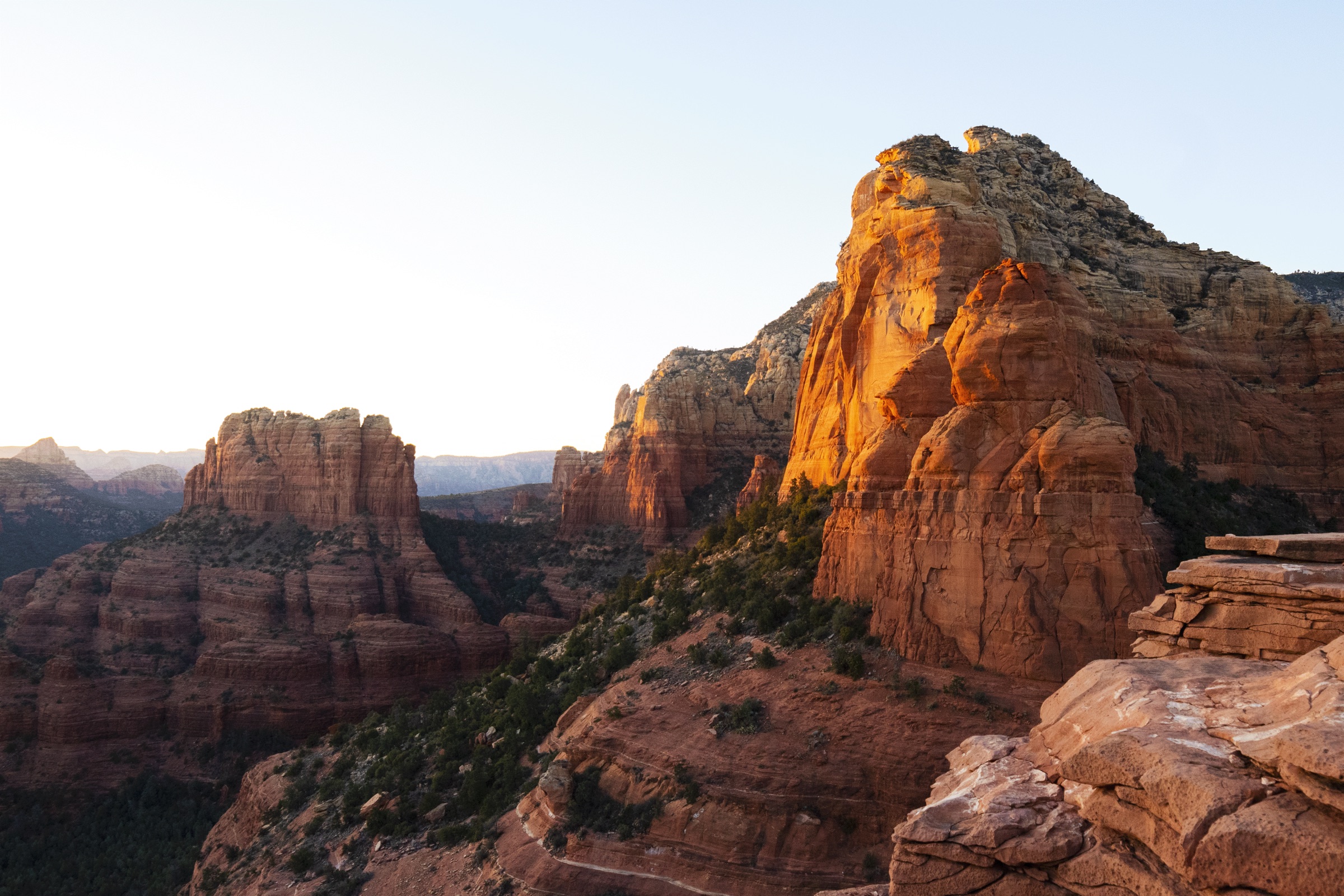
Then the first red formations appeared along State Route 179.
We immediately pulled into the Red Rock Ranger District Visitor Center, jumped out of the car, and began taking pictures like we had personally discovered Sedona. I remember standing there in complete awe, thinking it was one of the most beautiful things I had ever seen.
The funniest part is that the visitor center does not even have the great Sedona view. It has the first view. It is the trailer before the movie.
We got back into the car feeling very satisfied with what we had already seen, continued north, and then Sedona actually began. The rocks grew larger. The colors deepened. Every bend revealed another formation, and our conversation became a series of increasingly dramatic versions of, “Are you seeing this?”
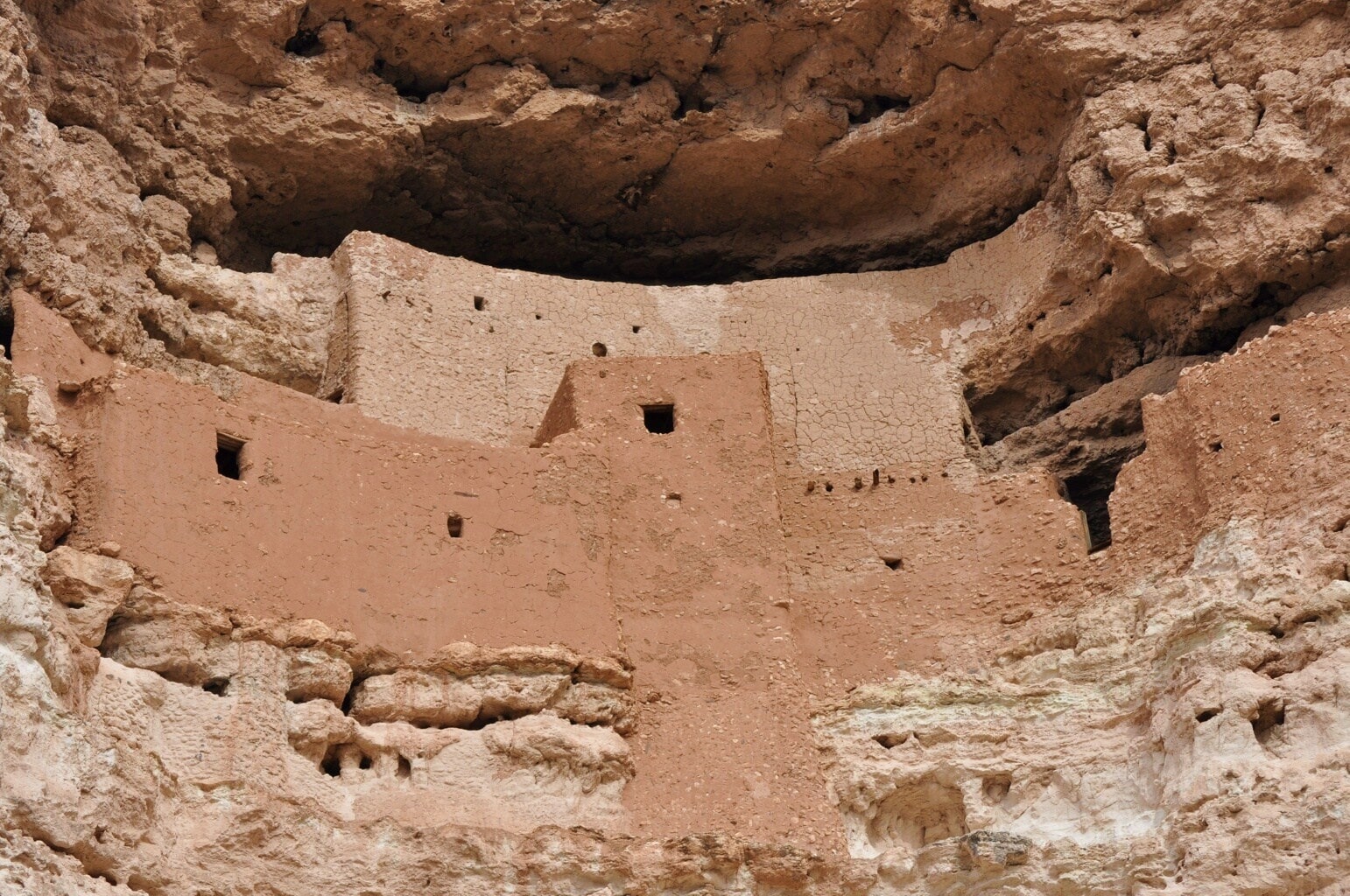
That trip also took us to Montezuma Castle and Jerome. It was my first real introduction to central and northern Arizona, and everything felt unfamiliar in the best possible way. Here were cliff dwellings pressed into pale rock, an old mining town balanced on a mountainside, and red sandstone rising out of the earth like someone had designed the landscape for a movie.
I fell in love with Sedona on that first visit. I even remember thinking, I could live here. At the time, I had no idea that I eventually would.

A State I Had to Learn Slowly
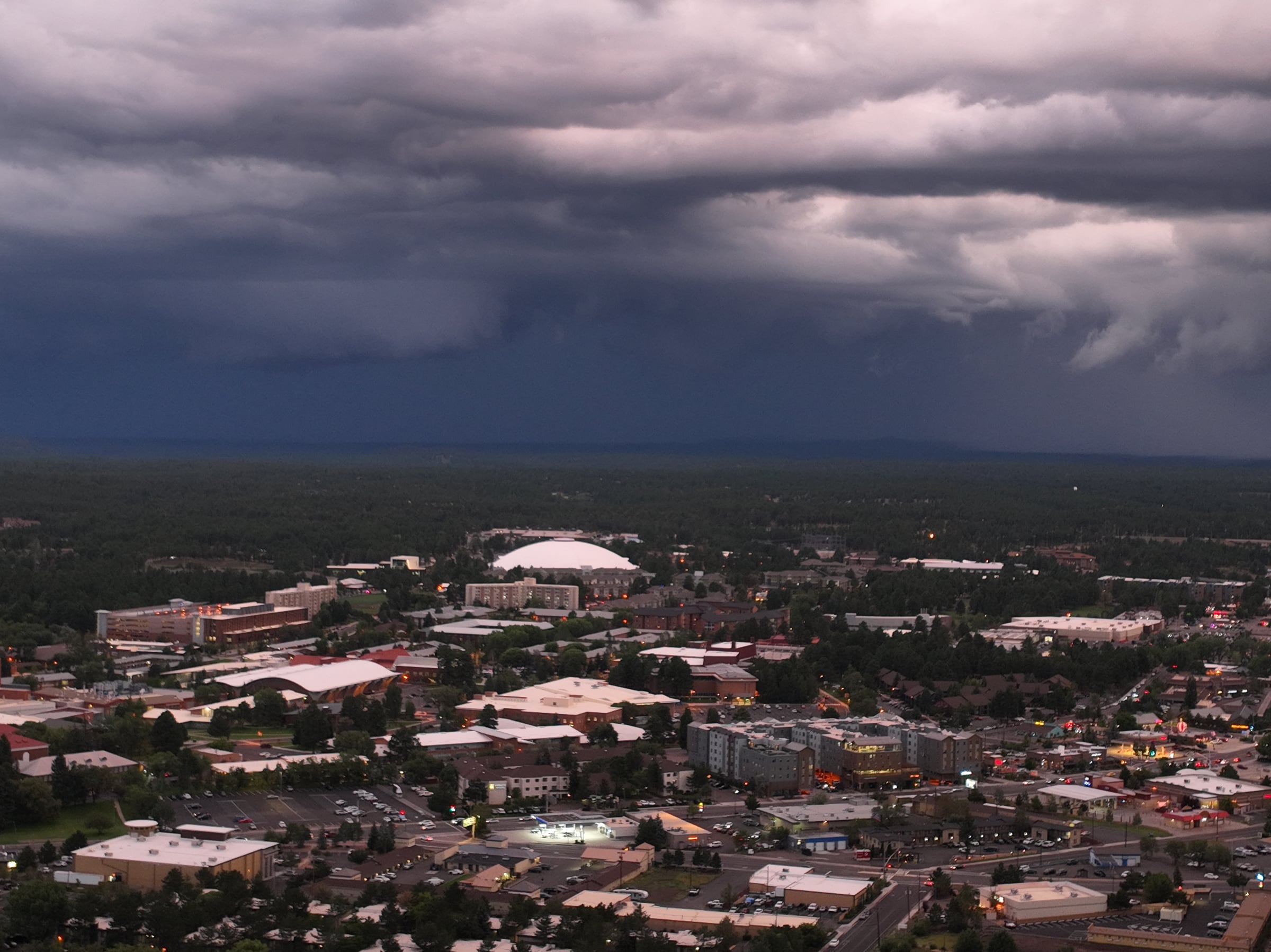
When I moved to Arizona in 2011, I started in Mesa. From there I lived in Phoenix, then Scottsdale. I spent plenty of time in Tempe too. Later came Prescott Valley, Sedona, and Flagstaff.
That list matters because I did not learn Arizona from one vacation or a collection of weekend recommendations. I learned it by living inside different versions of it. I commuted through it, coached in it, raised children in it, built businesses in it, photographed it, got lost in it occasionally, and drove across far more of it than any reasonable person should without receiving some kind of honorary gas-station sponsorship.
I never fully fell in love with living in the Phoenix area. The heat was difficult for me, especially coming from Maryland, and it never quite felt like home. There were things I enjoyed. I built friendships, coached lacrosse, and spent my fair share of nights in Old Town Scottsdale doing the things people in their twenties do when they are convinced sleep is optional.
But for a while, Phoenix seemed to confirm the Arizona I had imagined before visiting: hot, sprawling, and very, very desert.
It took moving north for the state to open up again.
The Night the Sky Changed
The house was technically in Prescott Valley, close enough to Prescott that everyone generally called the whole area Prescott anyway. It did not instantly feel like home, but the front yard offered me something familiar: grass and a large weeping willow tree.
We had a weeping willow in front of my childhood home in Maryland. Seeing those branches outside my Arizona house felt like a small bridge between the life I had left and the one I was still trying to understand.
Then one night, I sat outside in an Adirondack chair and looked up. There was a cloudy band stretched across the sky, except something about it did not make sense. I could see stars shining through it.
Those could not be clouds.
So I did what all great astronomers do at the beginning of their careers: I pulled out my phone and Googled the sky from my front yard.
It was the Milky Way.
I had probably seen it before and mistaken it for clouds, but this was the first time I understood what was above me. I did not own a real camera yet. I had only the deeply unimpressive camera on my phone, and I would not take my first photograph of the stars for another couple of years.
That night was still the beginning. Afterward, I went outside and looked up every evening. Every single night. There was no content plan, no business idea, and no polished announcement that I was “beginning my astrophotography journey.” I simply wanted to see it again.

Sometimes the thing that changes your direction begins quietly, while you are sitting in your front yard trying to identify a suspiciously sparkly cloud.
Prescott Valley became more than the place where I first recognized the Milky Way. It became my launch point.
I was a new mother in a new town, and exploring gave shape to our weekends. From Prescott, northern Arizona became more accessible, and the map expanded in every direction. I began traveling through Arizona and into Utah, Nevada, Colorado, and California. The trips were not always elaborate. Sometimes the point was simply to get in the car and find out what was there.
That was how I started building a relationship with this part of the country. One road, one hike, and one place at a time.
The Road to White Pocket
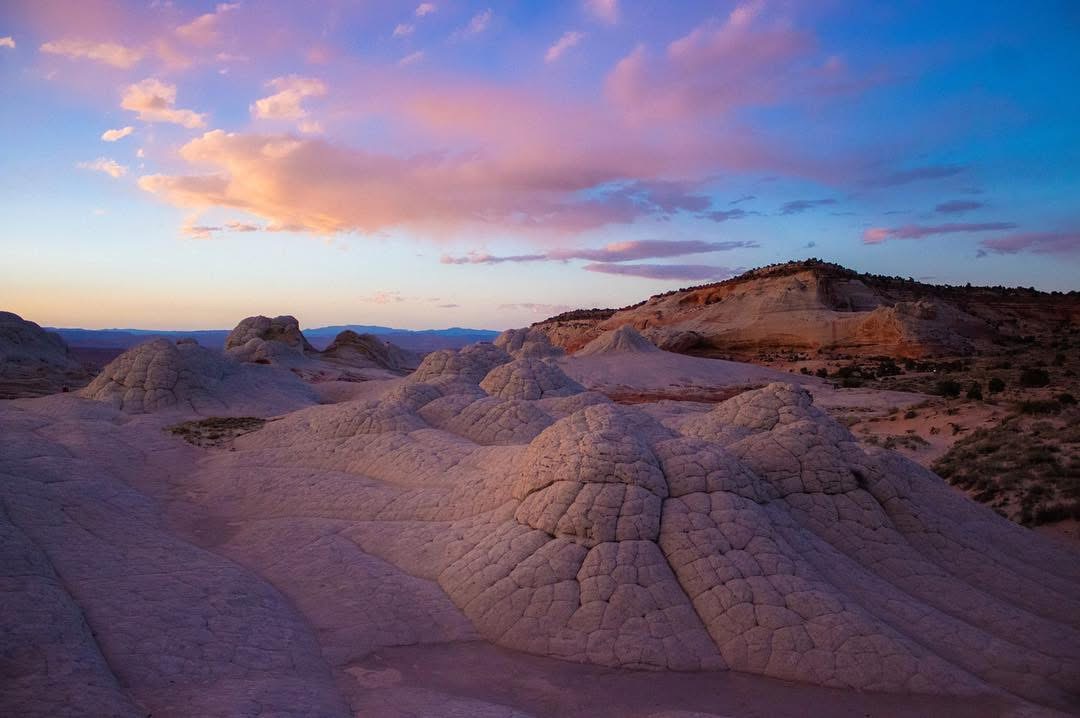
White Pocket sits deep within Vermilion Cliffs National Monument on the remote Paria Plateau near the Arizona-Utah border. The Bureau of Land Management describes it as a colorful sandstone feature shaped into windswept layers of orange, yellow, and white. In person, it barely looks terrestrial.
The road there is part of the experience. Reaching White Pocket requires miles of rough backroads and deep sand. Official guidance calls for a high-clearance, four-wheel-drive vehicle because people regularly get stuck.
I drove out in February in a Jeep Cherokee. It had four-wheel drive. “High clearance” would have been a more aspirational description.
We had read enough warnings about the sand to expect a serious off-road challenge, but the drive was surprisingly easy. The sand had frozen solid in the winter cold. We arrived thinking, perhaps incorrectly, that we had handled the whole thing beautifully.
Then the temperature fell.
It dropped to somewhere around 12 to 16 degrees that night. We had understood that February would be cold in the same way a person understands that childbirth might be “uncomfortable.” Technically correct. Wildly incomplete.
The tent was freezing. The landscape was extraordinary.

At sunset, pink and purple light spread across the sky above the pale sandstone mounds. The color of the clouds made the white formations seem almost luminous. Every surface twisted, folded, or curved in a way that made the landscape feel more imagined than real.
For a while, the cold became secondary. We stood there watching the light move across a place that looked like another world.
Then darkness settled in, and White Pocket offered something even rarer than the view.
The Kind of Silence That Gives Something Back
Most of us do not experience true quiet very often. Even in places we call peaceful, there is usually a road somewhere, an airplane overhead, another group nearby, or some mechanical hum our brains have learned to erase.
White Pocket is so remote that the absence of noise feels physical. If a vehicle travels on a distant road, you can hear it from miles away because there is nothing between you and the sound. Then it passes, and the silence closes again.
The stars reach all the way to the horizon. With no city glow swallowing the edges of the sky, the world suddenly feels much larger than the collection of problems you carried in with you.
That kind of quiet does not make me feel lonely. It makes me feel grateful.
I think about the strange decisions, hardships, obstacles, and ordinary days that somehow led me to that exact spot. All the moments when I did not know what I was doing. All the times life changed before I was ready. All the work it took to keep moving.
And then, somehow, there I was. Standing in the middle of nowhere beneath a pink sunset, later looking up at more stars than I could count.
Life rarely gives us enough silence to sit with ourselves. We spend so much time pouring energy into our families, work, responsibilities, and whatever new emergency has volunteered to become our personality for the week.
In a place like White Pocket, some of that energy comes back. You get to look around, breathe, and recognize something that is easy to miss while you are still surviving it:
I made it this far.
Returning to a Place, Returning to Yourself
Arizona is often reduced to whichever version of it someone happened to visit. Scottsdale becomes Arizona. Sedona becomes Arizona. The Grand Canyon becomes Arizona.
But the Arizona I know is the first red-rock reveal on State Route 179 and the realization that the better view is still ahead. It is a weeping willow in Prescott Valley that reminded me of Maryland. It is the Milky Way disguised as a cloud above an Adirondack chair. It is frozen sand, a questionable winter camping plan, and a White Pocket sunset so beautiful that being painfully cold almost felt reasonable.
It is also not frozen in time.
The Sedona I first visited in 2010 is not exactly the Sedona I know today. Prescott has changed. Flagstaff has changed. The Valley has changed. So have I.
As years pass and seasons change, places evolve alongside us. Going back somewhere familiar does not mean recreating the original experience. You are not the same person who stood there the first time, and the place may not be the same either.
Still, returning can feel like returning to yourself.
You remember who you were there. You can see the distance between that person and the one standing there now. A landscape becomes a kind of marker, holding a former version of you while making room for whoever you are becoming.
Visiting somewhere new offers a different gift. It gives you an experience that did not exist before. It can spark a curiosity, a career, a tradition, or a part of yourself you did not know was waiting.
And yes, money can technically buy the gas, the flight, the campsite, and an overpriced road-trip snack. Let us not become dishonest in the final paragraph.
But money cannot buy what the experience gives back to you.
You earn that part by going. By remaining curious. By continuing past the first viewpoint. By giving yourself enough quiet to realize how far you have come.
Arizona is not one place, and there is no single way to experience it.
That is exactly what keeps bringing me home.