
Northern Arizona Travel Guide
The Actually Useful First-Timer’s Guide to the Grand Canyon South Rim
Stop treating the canyon like a rushed add-on
July 3, 2026 · By Shannon Roberts, a local guide to the places, logistics, and details that make the trip workThe Grand Canyon rewards time. You can see it from a viewpoint in twenty minutes, but staying long enough to walk the rim, watch the light change, and learn what you are looking at turns a photo stop into an actual experience.
First-time park visits, families, sunrise and sunset, easy rim walks, geology and history, and travelers willing to give the main event its own night.
One or two nights near the South Rim
The South Rim is open year-round, but weather, roads, shuttle operations, trail conditions, and services change seasonally. The rim and inner canyon are also two very different climates.
The good stuff
Five things worth building the trip around.
Not every possible activity. Just the places and experiences most likely to make the trip feel like yours.
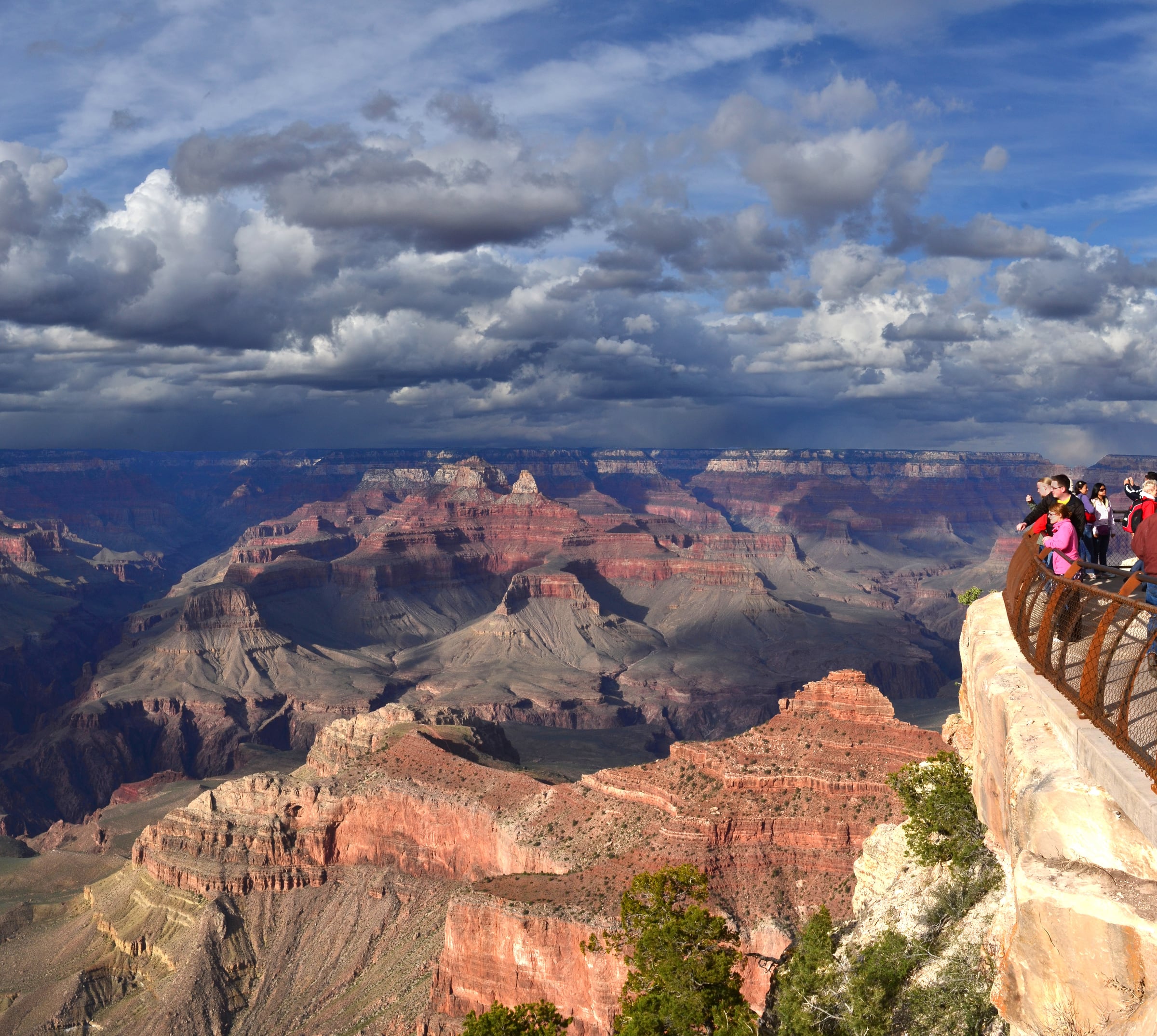
Begin at the Visitor Center and Mather Point
Get oriented, check current conditions, then take the first look without immediately trying to conquer the entire park.
Walk a section of the Rim Trail
Choose your own distance and use the shuttle to connect viewpoints. You do not need all thirteen miles to feel appropriately small.
Follow the Trail of Time
The 1.2-mile interpretive section between Yavapai Museum of Geology and Verkamp’s Visitor Center makes billions of years slightly easier to hold in your brain.
Use the shuttle for Hermit Road overlooks
Seasonal shuttle rules change, so check the current schedule. This is an easy way to see more without turning the day into a parking contest.
Drive Desert View Drive when conditions allow
The scenic road connects Grand Canyon Village with Desert View and its Watchtower, with multiple overlooks along the way.
The part that makes the trip work
What to know before the logistics start freelancing.
Entry does not require a timed reservation
The South Rim is open year-round. Grand Canyon National Park currently requires an entrance pass but not a timed-entry reservation. Entrance stations are cashless, and federal recreation passes are accepted. Lodging, campgrounds, mule trips, and certain programs are separate reservations and can fill months ahead.
Park once and learn the shuttle map
The Visitor Center has large parking areas and connections to the free shuttle system. Routes and schedules change by season. Hermit Road is closed to private vehicles from March through November, when shuttle buses and authorized tours provide motorized access. Lines can be long, so build waiting time into sunrise, sunset, and trailhead plans.
The rim is high desert, not Phoenix with a railing
The South Rim sits near 7,000 feet and can be cold, snowy, windy, or stormy even when lower Arizona is warm. The inner canyon is much hotter. Pack layers, water, sun protection, and traction when appropriate. Never use the rim forecast to estimate conditions thousands of feet below.
Stay overnight if the trip allows it
A day trip can deliver the first view and a rim walk, but one night adds sunrise, sunset, stars, and breathing room. Reserve in-park lodging or camping early. Tusayan is the closest gateway community; Williams and Flagstaff are farther bases that add significant driving.
Accessibility, children, and pets
Many South Rim viewpoints, visitor facilities, paved Rim Trail sections, and shuttle buses are accessible. A Scenic Drive Accessibility Permit can provide qualifying visitors access to some roads closed to general traffic. Pets must be leashed and are allowed on certain rim trails and developed areas, but not below the rim or on park shuttles; service animals follow separate rules.
If you only have one full day
A useful rhythm, not a military operation.
Sunrise or early light, then the Visitor Center and Mather Point.
Rim Trail, Trail of Time, lunch, and a ranger program if available.
A different overlook for sunset, followed by stars and no frantic drive back to Sedona.
Before you go
Five minutes of planning can save an impressive amount of nonsense.
- Buy or bring an entrance pass
- Check the park’s current conditions page
- Download the NPS app and offline park content
- Pack for rim weather
- Do not attempt a rim-to-river-to-rim day hike
Questions people actually ask
The quick answers before the browser-tab situation escalates.
Do I need a reservation to enter the Grand Canyon South Rim?
No timed-entry reservation is currently required. You do need a park entrance pass. Lodging, camping, mule trips, and some programs require separate reservations.
Is the Grand Canyon South Rim open year-round?
Yes, but snow, ice, storms, road work, and temporary closures can change access. Check the official conditions page and road recording before driving.
How many days do I need at the South Rim?
One full day is the practical minimum. One or two nights gives time for changing light, a rim walk, museums or ranger programs, and shuttle-based overlooks without turning the canyon into a rest stop.
Where should a first-time visitor park?
The Visitor Center parking areas are the simplest starting point for Mather Point and shuttle connections. Arrive early during busy periods and note the exact lot before leaving the car.
Are the Grand Canyon shuttles free?
Yes. Shuttle service is included with park admission, and routes vary by season. No shuttle ticket is required, but busy stops can have significant lines.
Can I drive Hermit Road?
Private vehicles are generally prohibited from March 1 through November 30. During that period, use the free shuttle, walk, bicycle where permitted, or take an authorized tour. Seasonal rules can change.
Can I see the Grand Canyon without hiking?
Yes. Major viewpoints, museums, scenic roads, accessible paths, and shuttles provide excellent experiences without going below the rim.
Can I hike to the river and back in one day?
The National Park Service strongly warns against attempting a rim-to-river-and-back day hike. The return climb, heat, distance, and elevation make it far more dangerous than the downhill start suggests.
Can I bring my dog?
Leashed pets are allowed in specific developed areas and on certain rim trails, but not below the rim or on park shuttle buses. Check the current pet page and arrange care before planning a below-rim hike.
Is the South Rim wheelchair accessible?
Many viewpoints, facilities, buses, and paved trail segments are accessible. Review the park accessibility guide and ask about a Scenic Drive Accessibility Permit for qualifying visitors.
Research sources and current-condition references
These sources support factual details. Verify time-sensitive closures, weather, fees, permits, and access before traveling.