Northern Arizona · September 13, 2026 · By Shannon Roberts
A Local Family’s Guide to Oak Creek in Sedona
A local family’s Oak Creek guide, with November flood closures, water advisories, future swimming ideas and practical ways to care for the creek.
Oak Creek is where Sedona changes personality. The red rocks are still there, obviously. They are not known for being subtle. But down beside the water, the air cools, the cottonwoods and sycamores take over, and the day begins to feel less like a sightseeing schedule and more like summer.
November 3rd access update For this visit, skip swimming and wading. Visit Sedona’s November 3rd advisory says to avoid Oak Creek because of flood hazards and reported sewage contamination. SR 89A through Oak Creek Canyon is closed between Sedona and Kachina Village as checked November 3rd. Check Arizona 511 before driving; a suggested shortcut does not override a barricade.
Access checked November 3rd, 2026: Forest Service flood alert · West Fork order · Slide Rock State Park · Arizona 511. Read my Northern Arizona flood travel update for the wider trip-planning picture.
My children have been coming here since they were toddlers. We have floated at Crescent Moon Ranch, played beside Cathedral Rock, studied tiny aquatic wildlife, hauled bags of trash out of the watershed and made the kind of family memories that become more valuable every year.
I also serve on the Oak Creek Watershed Council board of directors, so I cannot write a guide that tells you where to put your towel and skips the part about caring for the creek. Oak Creek is beautiful, heavily visited and more vulnerable than it looks.
This is a guide to the creek my family loves during normal operations. Use it for future plans; the current closure notes come first.

The quick answer: Oak Creek in Sedona
For a future open visit: Crescent Moon is my family favorite; Slide Rock is the famous water-slide option; Grasshopper Point has deeper water and rougher terrain. For November 3rd: those are not swimming recommendations. Follow the closures and choose an accessible activity away from the creek.
Can you swim in Oak Creek in Sedona?
During normal operations, several developed sites allow swimming or wading. Today’s advice is different: do not plan water play during the current flood recovery and creek advisory.
Oak Creek is a natural waterway, not a resort pool. Water depth, current, temperature and quality change with weather and runoff. There are no promises, no temperature controls and, at most locations, no lifeguard waiting to applaud your decision-making.
Important access update for November 2026
The Forest Service’s current flood alert lists affected recreation areas throughout the district. Check the specific site and its approach; September’s reopening is not a current all-clear. West Fork’s wilderness trail and the described drainage area remain closed under an order running through February 28, 2027, unless rescinded. The order’s implementation clause uses February 28 even though its heading says February 27. Read the current order and map; neither date promises reopening.
The Pocket Fire is out. These remaining restrictions are about the conditions left behind, not active flames.
Read my November flood travel update before planning a trip. The destination descriptions below explain normal operations, not a claim that those sites are open today.
Places to save for a future open visit
My favorite Oak Creek spot for families: Crescent Moon Ranch
Crescent Moon is usually my first recommendation for families. Its Forest Service page currently lists it as temporarily closed because of flooding, so save this section for later.
The setting is absurdly pretty. Cathedral Rock rises above the creek, the developed day-use area has picnic space and vault toilets, and families can find shallow places to wade as well as deeper pools when water conditions allow. Recreation.gov lists swimming, wading, fishing, wildlife watching and photography among the site’s activities.
It can also get crowded. Arrive early or visit on a weekday if you can. “We will just find somewhere to park” is one of those cheerful vacation sentences that Sedona enjoys disproving.
Crescent Moon works especially well for families because the outing does not depend on completing a strenuous hike. You can picnic, wander beneath the trees, photograph Cathedral Rock and spend time near the water without asking a tired child to summit anything first.
The creek bed is still uneven and the rocks are still slippery. Water shoes are helpful. A properly fitted life jacket is a much better choice for a young or uncertain swimmer than inflatable arm bands alone. Stay close enough to touch small children, even in water that looks shallow.

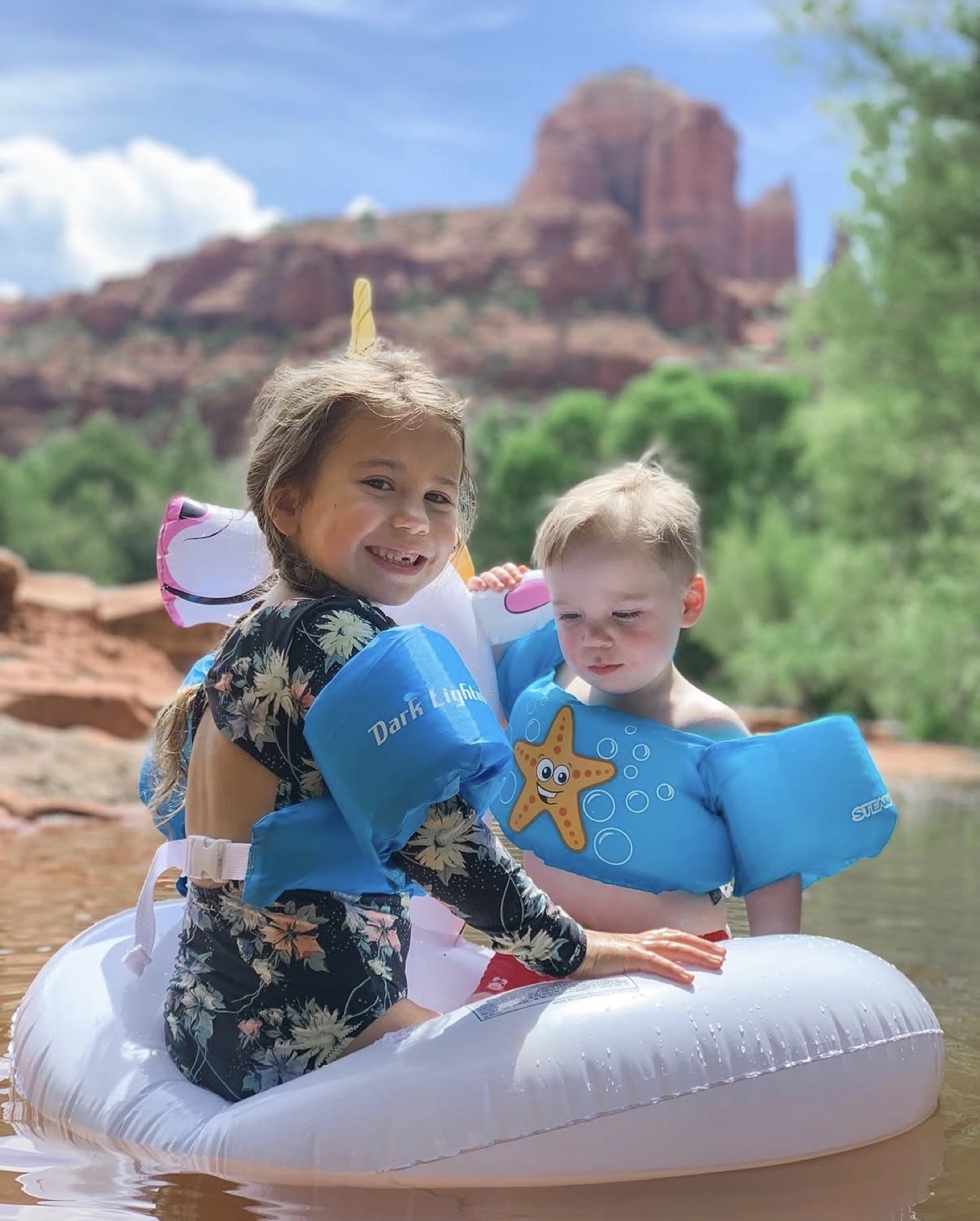
That old toddler photo is one of my favorites because it shows how long Oak Creek has been part of our family. The floaties have changed. The children have grown. Cathedral Rock has remained very committed to the background.
Slide Rock State Park
Slide Rock is the famous one: a historic orchard around a natural sandstone water slide. The following description is for normal operations; the park is closed November 3rd.
It is fun. It is also popular, cold and slippery.
When the park reopens, check its entrance rules and parking before leaving. Do not line up on SR 89A or assume a walk-in route is available.
The current closure and creek advisory take priority over all the swimming tips in this guide.

Grasshopper Point
Grasshopper Point sits in Oak Creek Canyon just north of Sedona and is known for deep water, shade and a short walk from its developed day-use area. It can be a beautiful swimming stop when open.
I would not describe it as the easiest choice for very young children. The terrain is rocky, some pools are deep and people are often tempted to jump from ledges. Water levels change, submerged hazards are difficult to see and there is no prize for being the person who discovered the rock was closer to the surface than expected.
Grasshopper Point’s Forest Service page now lists a temporary flood closure. Its September reopening is no longer a reason to travel there.
What about the little roadside pull-offs?
Do not treat every gap beside State Route 89A as public parking or every social path as an invitation to the creek.
Some land along Oak Creek is private. Some roadside areas are unsafe. Some informal trails have been closed and rehabilitated because heavy use damaged streambanks, increased erosion and carried more sediment into the water. ADEQ reports that 440 informal user-created trails have been closed or rehabilitated as part of the work to protect Oak Creek.
Use developed public access points. Park legally. If a site is full, choose another site instead of creating your own entrance through the vegetation. The creek does not need a new trail every time somebody spots an unoccupied patch of water.
Oak Creek safety: water quality, weather and kids
Is Oak Creek safe for swimming?
For this visit, skip swimming and wading. Visit Sedona’s November 3rd advisory says to avoid Oak Creek because of flood hazards and reported sewage contamination.
The Arizona Department of Environmental Quality has listed reaches of Oak Creek as impaired for exceeding the E. coli standard for full-body contact. That sentence sounds alarming, so here is the useful version: it does not mean the entire creek is always unsafe or that every visit ends with an illness. It means bacterial contamination has been a documented concern and visitors should take current conditions seriously.
E. coli can enter the watershed through several sources, including human and pet waste, wildlife, septic systems, stormwater and sediment. The Oak Creek Watershed Council’s water-sampling information notes that bacterial exceedances are relatively rare but can create problems when they occur.
Use extra caution after heavy rain, when runoff and disturbed sediment can affect the creek. Avoid water that is unusually cloudy, discolored, foamy or foul-smelling. Do not swallow creek water. Keep out if you have open wounds, and wash hands before eating—especially if the same hands have been moving rocks, holding snacks and doing the approximately 400 other jobs children assign them in one afternoon.
Check current park notices, Forest Service alerts and public-health guidance before entering the water. A beautiful view is not a laboratory result.
The water is colder and stronger than it looks
Oak Creek can be genuinely cold, including on days when the surrounding rocks feel like a pizza oven. Enter gradually and watch for signs that a child is becoming too cold.
Flow can increase after storms or snowmelt, and monsoon weather may affect a drainage even when the sky directly above you looks harmless. Never enter a flooded, fast-moving or debris-filled creek. If officials close an area for flash-flood risk, the absence of rain on your windshield is not a counterargument.
For children and uncertain swimmers:
Use a properly fitted life jacket near deeper or moving water.
Stay within arm’s reach of young children.
Wear water shoes with good traction.
Do not dive into water you have not personally checked.
Keep everyone away from strong current, undercut banks and strainers such as fallen branches.
Leave immediately when weather, water color or flow begins to change.
Oak Creek with children: what I actually bring
My useful family packing list is not glamorous:
Water shoes
Life jackets for young or uncertain swimmers
Drinking water—creek water is not the backup bottle
Sun protection and layers for the shade
Towels and dry clothes
Food in secure containers
A small first-aid kit
Trash bags
Dog-waste bags if a dog-friendly site is part of the plan
Patience, because at least one item will return home soaking wet for reasons nobody can explain
Glass containers do not belong at the creek. Neither do loose wrappers, abandoned toys, broken inflatables or the watermelon rind someone has decided is “basically nature.” Pack out all food scraps. Wildlife does not need the buffet, and the watershed does not need the consequences.
Why Oak Creek needs visitors who care
Why one bag of trash actually matters
I serve on the Oak Creek Watershed Council board because I want this place to survive our love for it.
The Council’s work connects water quality, wildlife habitat, recreation and community education. Its Oak Creek Ambassador Program reports that volunteers have kept more than 30,000 pounds of trash out of the watershed and maintained pet-waste stations that prevented tens of thousands of pounds of additional waste from reaching the creek.
Those numbers are impressive. They are also a little horrifying. Nobody should be able to measure abandoned creek trash in the weight of several elephants.
Pet waste, human waste and food scraps can all contribute to contamination. Trash attracts wildlife to heavily used areas, and that creates more waste close to the water. Sediment matters too: erosion and damaged streambanks can create places where bacteria persist.
Protecting Oak Creek is not an abstract environmental slogan. It is picking up after your dog, using a restroom, staying on established trails and carrying out what you brought. Very little of watershed stewardship photographs dramatically. A surprising amount of it involves properly closing a trash bag.

My children have joined cleanups too. I want them to enjoy the creek, but I also want them to understand that enjoying a place creates a responsibility to care for it. Apparently this is my version of a relaxing family outing: everyone gets a reflective vest and a bag.
The tiny wildlife living under the rocks
One of the best ways my children have learned about Oak Creek is through the Watershed Council’s hands-on macroinvertebrate work.
Aquatic macroinvertebrates are small animals without backbones—things like insect larvae and other tiny organisms—that live in and around the streambed. Their diversity can help researchers understand ecological conditions in the creek. The Council’s surveys have examined how sedimentation affects these organisms and the habitat they depend on.
For children, the science becomes immediate. “Protect the watershed” is a large idea. Finding an entire tiny world living beneath the rock beside your shoe makes the idea much easier to understand.

How to be a good Oak Creek visitor
You do not need a board position or a scheduled cleanup to help.
Use developed public access points and established trails.
Park only where parking is legal.
Pack out every piece of trash and every food scrap.
Pick up pet waste and carry the bag out with you.
Use restrooms; do not leave human waste or toilet paper near the creek.
Do not wash dishes, clothing or yourself in the water with soap.
Never feed wildlife.
Leave rocks, plants and aquatic animals where you found them.
Respect closures immediately and without attempting to negotiate with the sign.
If you have room in your bag, pick up one thing that is not yours. I wish nobody ever left trash behind, but until that becomes true, leaving with one extra piece is a practical way to help.
The best time to visit Oak Creek
Late spring through early fall brings the warmest air for water play, but conditions matter more than the month printed on the calendar. Snowmelt can make the creek cold and swift. Summer brings crowds and monsoon storms. Autumn can be beautiful under changing leaves, while the water becomes far less interested in pretending it is warm.
For a quieter experience, try a weekday morning. Check the weather and site status before leaving, then check again before entering the water. During busy periods, arrive with a second choice already agreed upon. This prevents the parking lot from becoming the location of a family summit meeting.
Frequently asked questions about Oak Creek in Sedona
Where is Oak Creek in Sedona?
Oak Creek runs from the Mogollon Rim through Oak Creek Canyon and Sedona before joining the Verde River. Popular public access areas include Slide Rock State Park, Grasshopper Point and Crescent Moon Picnic Site at Red Rock Crossing.
What is the best Oak Creek swimming spot for families?
For a future visit under normal operations, Crescent Moon is usually my first choice for families. It is currently closed, so it is not a recommendation for swimming today.
Is Crescent Moon Ranch open?
No. Crescent Moon’s Forest Service page lists a temporary closure due to severe flooding, checked November 3rd.
Is Slide Rock open for swimming?
Arizona State Parks confirms Slide Rock State Park is closed November 3rd because flooding closed SR 89A. That includes a visit to the orchard or homestead, not just the swimming area. Check for a new park notice before making plans.
Is Grasshopper Point open?
No. Grasshopper Point’s Forest Service page lists it as temporarily closed due to severe flooding, checked November 3rd.
Is Oak Creek safe after rain?
Do not enter Oak Creek during the current flood recovery and advisory. For future visits, rain can still change flow and water quality quickly; follow the managing agencies’ current guidance.
Are dogs allowed at Oak Creek?
Rules vary by site. Check the managing agency’s current rules before bringing a dog. Where dogs are allowed, keep them under control and pick up and pack out every bit of pet waste.
Can you drink water from Oak Creek?
Do not treat Oak Creek as drinking water. Bring enough potable water for every person in your group.
Does Oak Creek have lifeguards?
Do not expect lifeguards at Oak Creek recreation areas. Visitors are responsible for assessing conditions, supervising children and using appropriate flotation equipment.
Before you go
Check these sources on the day of your visit:
Access information refreshed November 3rd, 2026. The family memories and normal-operation descriptions are background, not a live opening guarantee.
Oak Creek has given my family years of swimming, learning, laughter and muddy shoes. I want other families to make those memories too.
When the creek is ready to welcome visitors again, choose an open legal access point, keep children close and pack everything out. Right now, caring for it means giving it space.
The creek will not send a thank-you note. It will simply be a little cleaner for the next family.