Exploration · May 12, 2026 · By Shannon Roberts
Arizona Is Not One Place: What 15 Years of Living Here Taught Me
After 15 years and seven Arizona communities, I stopped asking whether someone will like Arizona. The better question is which Arizona fits the life they want.
Arizona is not one place. After 15 years of living in Mesa, Tempe, Phoenix, Scottsdale, Prescott, Sedona, and Flagstaff, that is the clearest answer I can give anyone who asks, “Will I like Arizona?”
The better question is not “Will I like Arizona?” It is: Which Arizona place fits the way I want to live, travel, and feel?
The Arizona of a polished Scottsdale patio is not the Arizona of a snowy Flagstaff morning. Prescott does not move like Phoenix. Sedona does not feel like Tucson. Even places separated by an hour of highway can have different weather, different rhythms, and entirely different ideas about what a good Saturday looks like.
I did not understand any of that the first time I came here. I thought Arizona was one enormous barren desert. Then I saw Sedona and Jerome in the same day, and the state quietly ruined my theory.
The Arizona I did not know existed
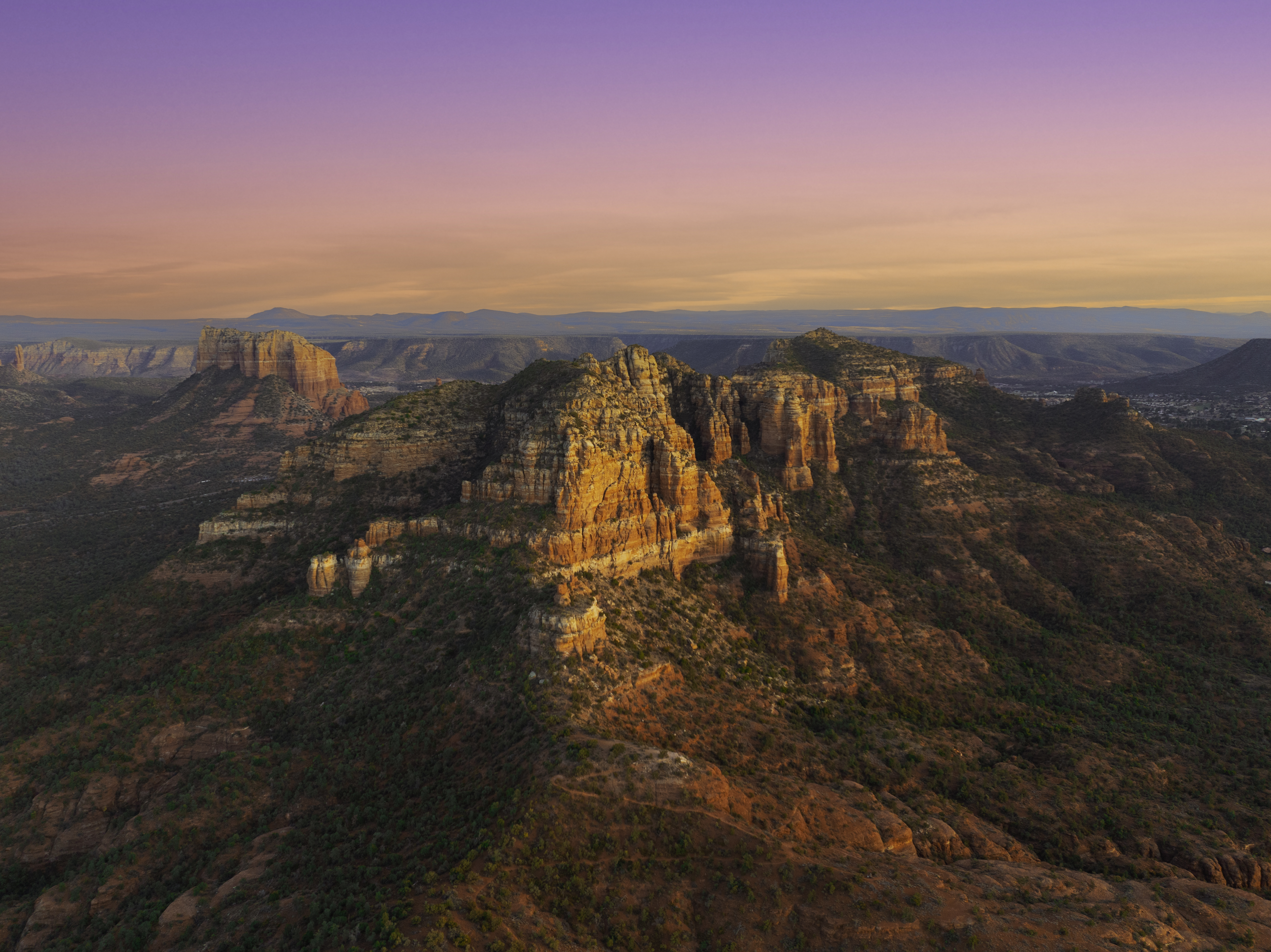
On that early trip, Sedona’s red rocks looked unreal—less like a place people lived and more like someone had adjusted the saturation too aggressively. I remember thinking, very simply, I want to live here one day.

Looking back now, that thought feels almost suspiciously tidy. I did eventually live there. But between the sentence and the mailbox came years of other Arizona addresses, work, children, uncertainty, reinvention, and several temperatures that felt personally hostile.
I have written about moving to Arizona alone and starting over, but one of the most important things about that move is how little visual preview I had. This was before every town had been turned into a carousel, a reel, and a drone reveal. Moving across the country still contained a fairly ambitious amount of surprise.
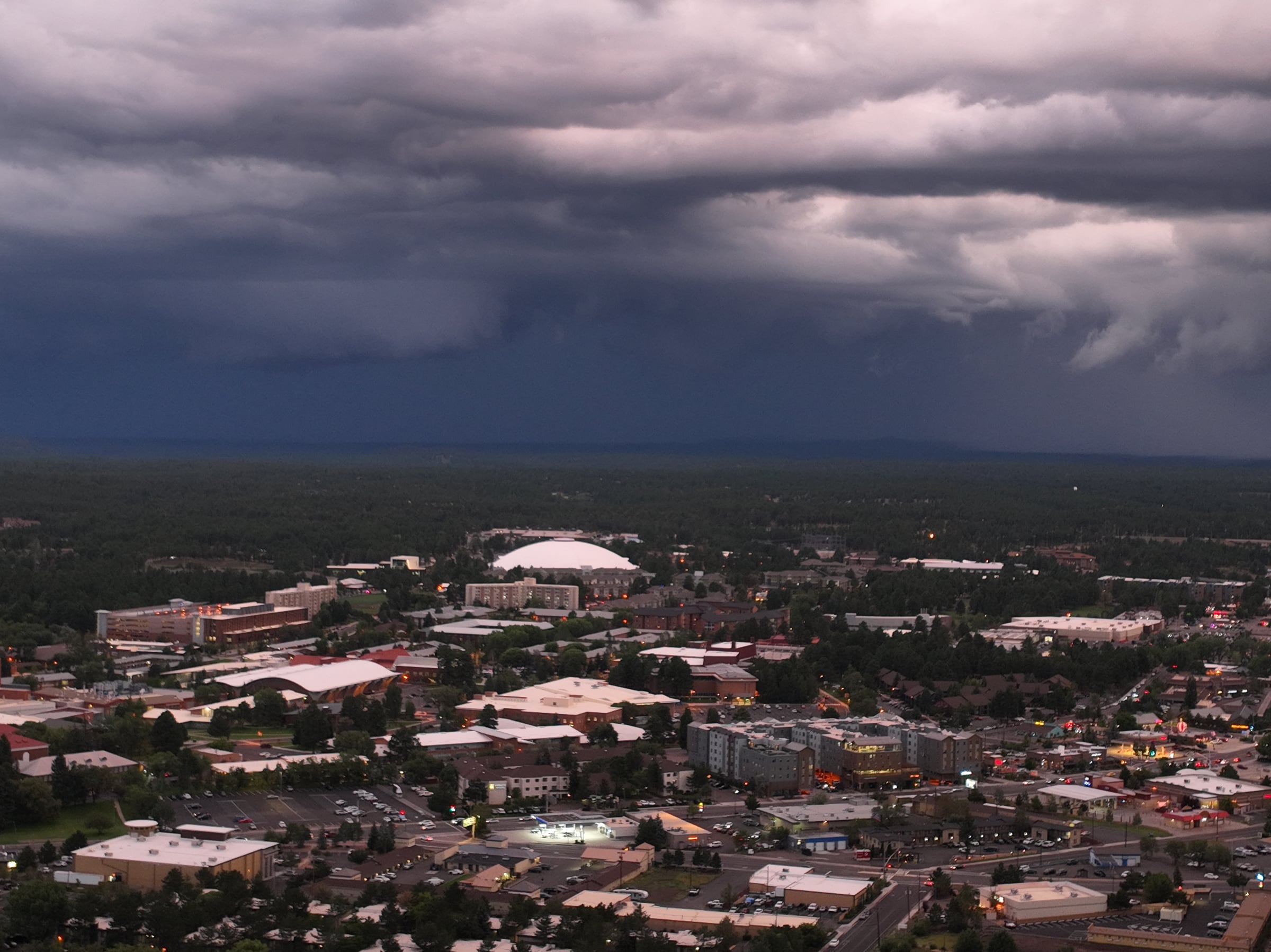
During my first year here, I drove through Flagstaff on the way to Grand Canyon National Park. I stopped at a gas station that overlooked a high-school football field. Students were practicing beneath the mountain, and I stood there thinking, These kids go to school with this view every day? Do they even know how lucky they are?
Then I watched sunrise at the Grand Canyon.
Those two moments arrived back to back: teenagers at an ordinary practice beneath a mountain, then first light opening over one of the most extraordinary landscapes on earth. Together, they widened my idea of Arizona. The state was not a single climate or postcard. It was a collection of worlds hiding inside one outline.
Arizona introduced itself with heat
Of course, Arizona did not reveal all of its complexity through poetic sunrise moments. Sometimes it used blunt force.
I grew up playing and coaching lacrosse in Maryland, where scheduling a clinic in June was completely normal. During one of my first Arizona summers, I planned a June clinic in the Phoenix area. The athletic director warned me it might be hot.
It reached about 113 degrees.
“Hot” turned out to be an admirably restrained description. The clinic was unbearable. The turf radiated heat, the air felt like it had been preheated, and I began to suspect that everyone who had welcomed me to Arizona had omitted a fairly important paragraph.
That same summer brought monsoon storms and haboobs—towering walls of dust driven by thunderstorm outflow. I had encountered both mostly in books and movies. Watching the sky turn brown in real life made me wonder, with complete sincerity, what I had gotten myself into.
It also taught me something useful: you cannot understand a place from its best promotional weather. Daily life is the part that edits the fantasy.
The cities were chapters, not rankings
People sometimes hear that I have lived in seven Arizona communities and expect a ranking. I do not have one. A place can be right for one version of your life and wrong for another. That does not make the place bad. It means you changed—or finally learned what you needed.
Scottsdale was fun, convenient, polished, walkable in the right areas, and rich in the small luxuries that make daily life easy. I liked the restaurants, the amenities, and the feeling that something was always available. I never adapted to the heat, though, and as traffic grew heavier, I became ready for a different pace.
Prescott gave me that slower pace. In my experience, it also felt strongly retiree-oriented, conservative, and church-centered. Over seven years, I struggled to find my people there. That is not a verdict on Prescott or everyone who loves it. It is simply the honest record of my fit with the community at that point in my life.
Mesa, Tempe, and Phoenix were shorter chapters, but they mattered too. They taught me the scale of the Valley, the tradeoffs between access and sprawl, and how quickly “nearby” can become a philosophical concept once traffic is involved.
None of those experiences can be reduced to best or worst. They were different answers to different questions.
Sedona was the first place that felt like choosing myself
Sedona was not a blind restart. I had already spent years working there, photographing and filming weddings, building friendships, and learning the town beyond its overlooks. By the time I moved in, I had community and a business there. What I did not yet have was the experience of waking up and knowing I had chosen the address for myself.

After a divorce and a difficult period building a business from home during COVID while caring for two young children, I reached a point where I would no longer let other people decide where I could live or what I was capable of doing. I was still committed to being a present mother. I was also learning that being present did not require making myself smaller.

That rebuilding chapter is part of the story of how I built my photography business while everything felt uncertain. Moving to Sedona was not the glamorous ending. It was the moment I trusted myself enough to begin again.
The day Arizona truly felt like home, I was doing something almost aggressively ordinary: testing the key to my mailbox outside my apartment on Jordan Road.
It was near sunset. I looked up and saw Wilson Mountain and the red-rock skyline glowing above the street. I remember thinking: I live here. This is my street. This is my mailbox. This is my view from my mailbox.
The dream I had carried since that first drive through Sedona had become mail retrieval.
And I was so happy.
I have written more about what living in Sedona actually felt like—the community, monsoons, traffic, and ordinary Tuesdays inside somebody else’s vacation. But the mailbox is still the moment I return to. Freedom did not arrive looking cinematic. It arrived as a small metal door opening with the right key.
Flagstaff surprised me by becoming home too
I had visited Flagstaff, but I did not really know its personality. When moving there became the practical next step, I was unsure. Sedona had been the place I had actively chosen. Flagstaff initially felt like the place life had selected for me.
Then it began to reveal itself.
Flagstaff is small enough to feel known and big enough to keep discovering. It is a college town and a small town at once. In my experience, it is open-minded, supportive, outdoorsy, and unusually good at turning familiar faces into real community.
One ordinary day, I ran into someone I knew while setting up lacrosse practice. Later, while buying my husband a sandwich, I ran into someone else. Neither encounter was remarkable. That was exactly why they mattered.
Belonging is often less dramatic than we expect. Sometimes it is simply being recognized twice before dinner.
I found close friends in Flagstaff. I found work and purpose that fit me. I found a place where the mountain is part of the daily orientation system and the night sky still feels present. The same town I once viewed from a gas station as an outsider became the place where my own family built a life.
So, which part of Arizona will you like?
There is no honest universal answer, but there are better questions.
Do you want polish, convenience, restaurants, and resort-level ease? Scottsdale may make sense. Are you looking for a slower rhythm? Prescott or Payson may feel more natural. Do you want an outdoors-centered college town where winter is not decorative? Flagstaff has a distinct personality. Tucson has its own cultural gravity, desert identity, and pace that cannot be substituted for Phoenix with different restaurants.
Those are broad impressions, not formulas. Neighborhoods matter. Seasons matter. Your stage of life matters. So do your politics, hobbies, tolerance for heat, need for community, budget, work, and willingness to drive.
But that is precisely the point: Arizona has a place for almost everybody because Arizona is not one thing.
No, Arizona is not “full”
I understand the instinct behind the phrase. People grieve change. Roads get busier. Beloved places become crowded. Housing becomes harder. A quiet trail acquires a geotag and, shortly afterward, a parking problem.
Not all growth is good, and not every change should be celebrated. But growth is not uniquely Arizona’s failure. Maryland, where I grew up, looks dramatically different than it did 10 or 20 years ago. Places evolve because people do.
I have written about why the Arizona people remember cannot be used as the only measure of the Arizona that exists now. Nostalgia can be tender and useful. It should not become a gate we close behind ourselves after arriving.
Newcomers are not less entitled to build a life here because they arrived after someone else did. None of us gets to claim that the version of a place we first loved was the final authorized edition.
What 15 years in Arizona taught me
Approach this state with flexibility. Let it contradict the image you brought with you. The place you expected to love may not fit. The town you were unsure about may become the one where people know your name.
Disappointment is not always proof that a trip or move was a mistake. Sometimes it is the moment before discovery—the point where the fantasy falls away and the actual place finally has room to introduce itself.
Arizona taught me that home can be chosen more than once. It can be a red-rock apartment, a college town beneath a mountain, a city chapter you outgrow, or a landscape you did not know existed until the road curved and there it was.
The older I get, the less I think luxury is about having the most impressive view reserved exclusively for me. It is having enough time to notice the view I already have.
Darkness. Silence. Space. No urgency to move on.

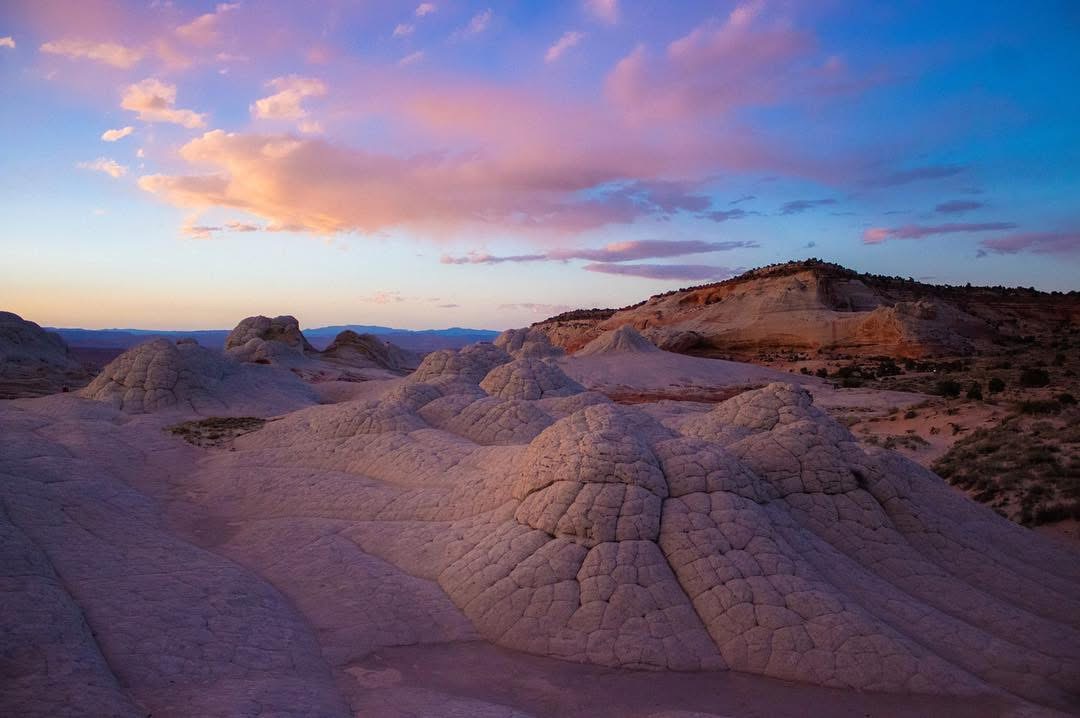
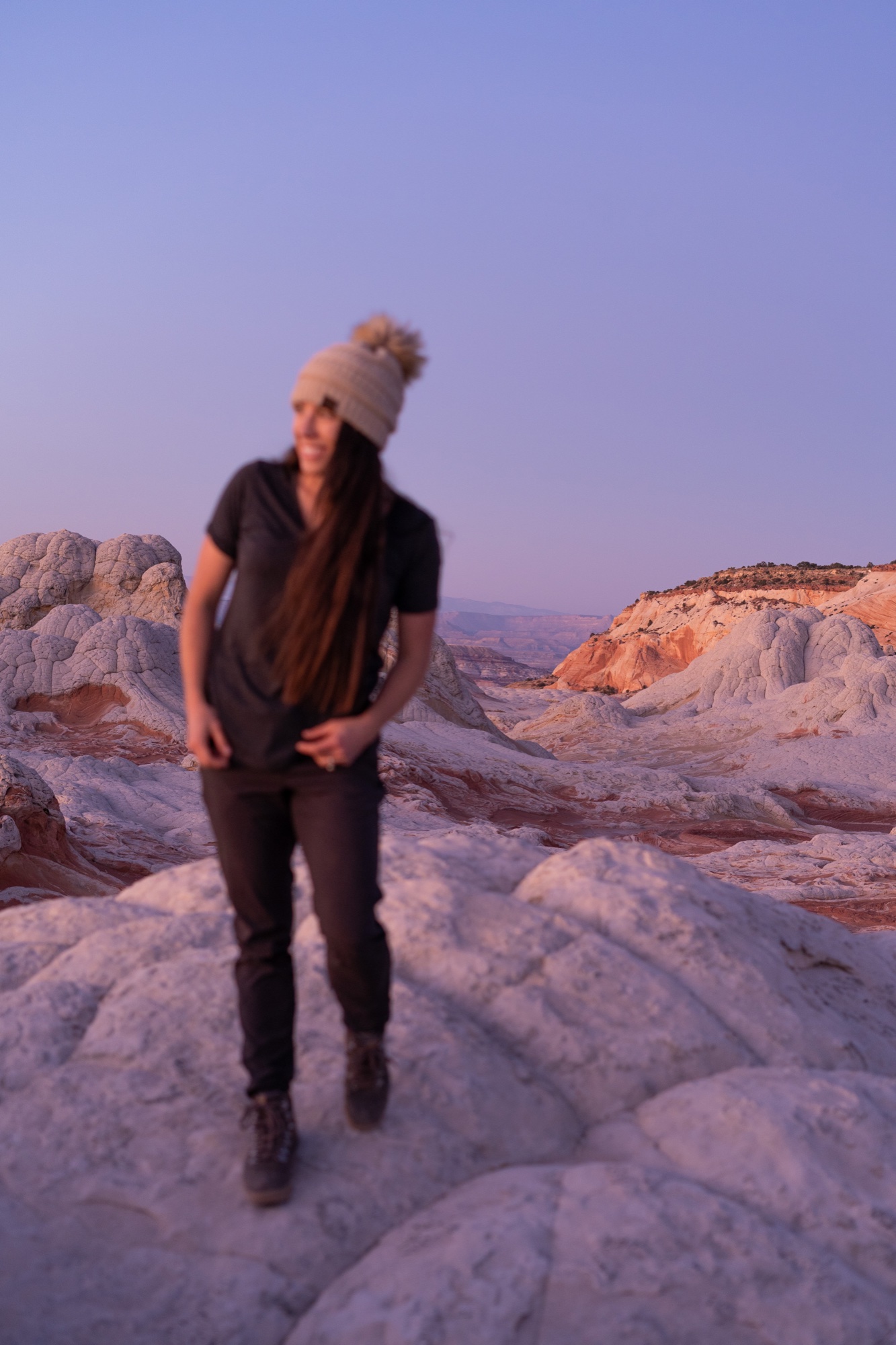
An Arizona sunset on a quiet trail, and enough time to watch the sky change.
That is not the only Arizona.
It is simply one of mine.