Exploration · March 4, 2026 · By Shannon Roberts
I Finally Moved to Sedona. Living There Wasn’t What I Expected.
A former Uptown resident shares what living in Sedona is really like—from monsoons and small-town community to traffic, tourism, and finding home.
I came for the red rocks. I stayed for the monsoons, the neighbors, and the ability to identify the worst possible time to buy groceries. Then, just as I finished unpacking, life suggested I pack again.

On move-in day, there were boxes everywhere and butterflies in my stomach.
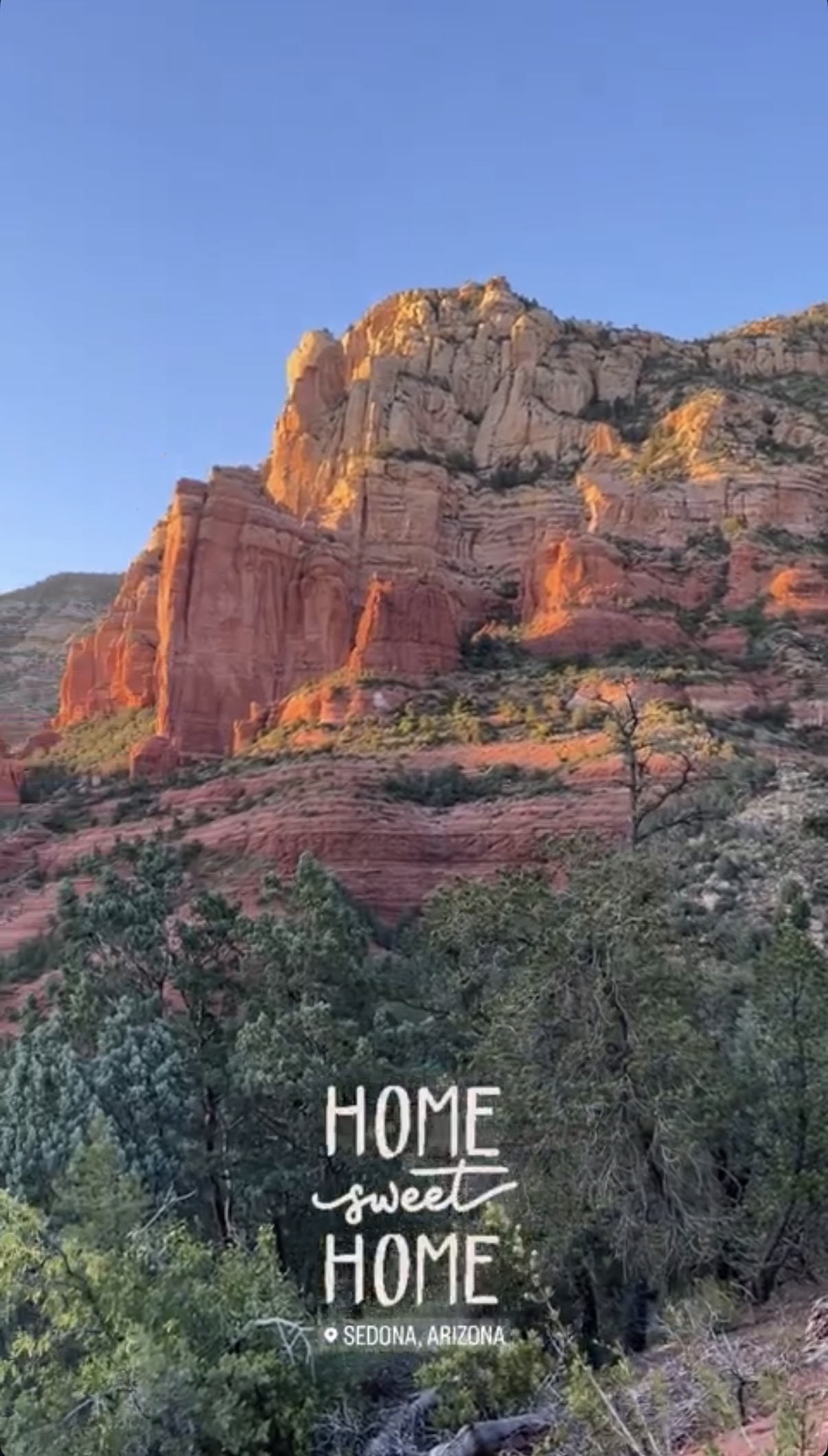
The apartment was small—two bedrooms in Uptown Sedona, nothing extravagant—but the location felt almost impossible. Outside, the red-rock walls rose around town like scenery someone had forgotten to take down. Wilson Mountain stood at the end of the road. The shops and sidewalks of Uptown were close enough to reach on foot, and for the first time in a long time, I had arrived somewhere that did not merely contain my life.
It felt like home.
I did not ease into that feeling slowly. I attacked it with wallpaper.
Apparently, after years of uncertainty, my nervous system had decided the clearest available path to emotional security was limewash and an extremely committed theme.

I limewashed the walls, hung a new lamp, bought a couch, stocked the refrigerator, and built bunk beds for the kids. Then I began decorating around a highly specific design philosophy that can best be described as Sedona Space Cowboy.
I had artwork of cowboys riding into the Arizona desert while being beamed into UFOs. I added funky little pieces I had collected around Sedona over the years—objects that made perfect sense together if you accepted that the American West and intergalactic travel had always been natural companions.
While I worked, I played “Space Cowboy” by NSYNC.
There are people who create tasteful moving-day playlists with acoustic guitar and songs about new beginnings. I chose late-nineties boy-band space western. This is how you know the apartment was authentically mine.
The kids loved their bunk beds. I loved watching the blank rooms turn into evidence that we belonged there. By the time I finished, the apartment was not fancy, large, or styled for anyone else’s approval. It was warm. It was weird. It was ours.
The First Night It Felt Real
Once the boxes were gone and the rooms had settled around us, I invited a few friends over to play Monopoly Deal.
My living room was also my dining room, because small apartments believe strongly in making every square foot hold down at least two jobs. We crowded around the table and played round after round, laughing and arguing over pretend properties inside a home I could finally afford in a town I had loved for years.
Nothing extraordinary happened that night.
That was what made it extraordinary.
After years when safety had felt like something I had to construct one paid invoice at a time, I was sitting with friends in my own apartment. My children were happy. The refrigerator was full. There was a couch in the living room and a UFO abducting a cowboy on the wall.
I had made it home.

Sometimes stability does not announce itself. Sometimes it looks like a card game around a dining table in a room that is also the living room.
Monsoon Weather
That summer, the monsoons came.
Anyone who has only seen Sedona beneath polished blue skies has missed one of its best moods. The air changes first. Clouds gather over the red rocks. The light goes strange and silver, wind moves through town, and then the sky opens with the confidence of something that has been waiting all day to make an entrance.
When the rain arrived, we ran outside.
The kids and I splashed in the street and jumped into puddles while Wilson Mountain disappeared and reappeared behind curtains of rain. Water rushed along the pavement. The desert smelled like wet stone and creosote, that sharp, earthy scent that makes Arizona feel briefly new again.
Tourists came to Sedona for the formations, the sunsets, and the photographs proving they had stood somewhere beautiful. We had all of that too. But living there meant getting the ordinary version—the grocery bags, the school mornings, the wet shoes by the door, the children shrieking in monsoon puddles with a mountain at the end of the street.
That was the version I loved most.
A Small Town Disguised as a Destination
Sedona receives millions of visitors and somehow still feels like a very small town.
The community is close. Everybody knows everybody—or knows somebody who knows everybody—and people look out for one another. Visitors experience Sedona as a collection of trailheads, hotel rooms, restaurants, galleries, jeep tours, and overlooks. Residents experience the web underneath it: familiar faces at the grocery store, friends passing on the road, neighbors who notice when something is wrong.
The pace was slower than anywhere else I had lived in Arizona, even Prescott. That slowness was not laziness. It was spaciousness. Life had room around it.
It also came with rules that nobody printed in the welcome packet.
Most importantly: do not grocery shop when the weekend is arriving.
By Thursday or Friday afternoon, visitors were checking into their rentals and making the same understandable first stop. Grocery carts multiplied. Parking spaces vanished. The aisles filled with people stocking an entire vacation kitchen at once, apparently preparing to spend forty-eight hours beyond the reach of civilization.
I learned to shop in the morning, in the middle of the week, when the store belonged to people buying ordinary things in ordinary quantities. This was local knowledge, acquired through experience and the deep personal regret of standing behind several vacation households buying enough sparkling water to survive a siege.
The View from Above the Traffic
Traffic was the clearest reminder that our little town was also one of Arizona’s most famous destinations.
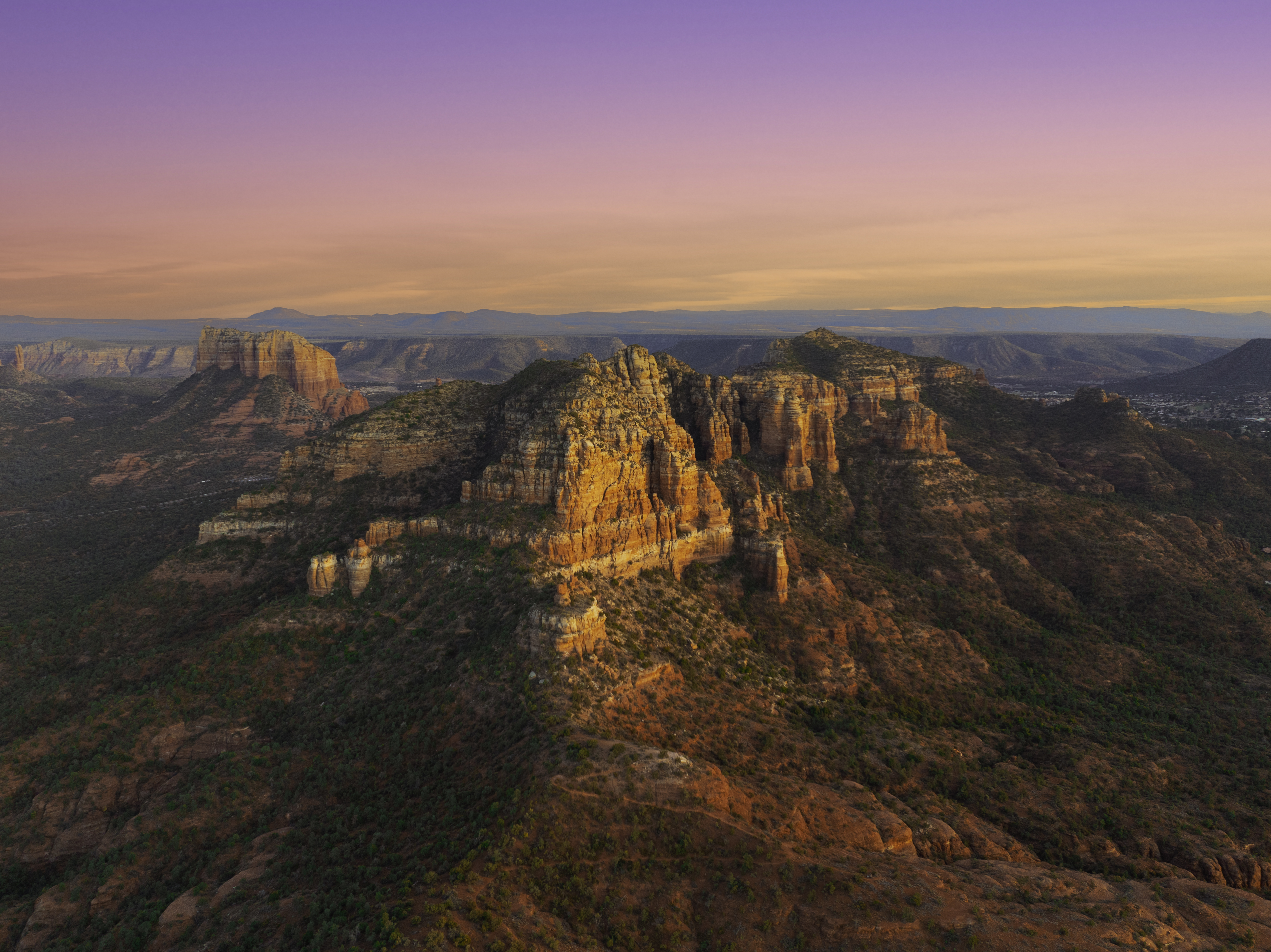
On busy summer days, Oak Creek Canyon could back up spectacularly. Before later road improvements changed some of the flow through Uptown, I could launch my drone from near home and look down the road to see just how bad it was.
This was not the drone footage most people associate with Sedona. No sweeping cinematic reveal. No lone hiker moving toward an empty horizon. Just a very expensive aerial traffic report delivered by a photographer in her Space Cowboy apartment who wanted to know whether leaving home was a terrible idea.
Usually, I avoided the problem entirely.
I rode my e-bike almost everywhere—even to the grocery store. The kids and I could walk into Uptown, wander among the shops, get ice cream at Sabrina’s or Black Cow Cafe, and sit together watching visitors pass. We were surrounded by people experiencing their special Sedona day while we were simply having a Tuesday.
That was one of the quiet pleasures of living there: inhabiting someone else’s vacation as your everyday life.
The People Who Promise to Heal You
Sedona has long attracted people searching for healing, meaning, reinvention, or something they cannot quite name. Many people in its spiritual community are sincere, generous, and deeply committed to helping others.
But any place that draws people in vulnerable seasons will also draw people who know how to profit from vulnerability.
I am not naturally part of Sedona’s more intensely spiritual world. I learned to be careful around self-appointed healers and spiritual entrepreneurs who seemed unusually eager to identify a problem in me that—conveniently—they could also sell me the solution for.
Some people call that intuition. I sometimes called them energy vampires, which felt thematically appropriate in a town where my wall art already included alien abductions.
This is not an accusation against an entire community, nor is it a story about any particular person. It is simply one of the less photogenic lessons of living in a place known for transformation: an offer of help is not automatically harmless, and a claim to special insight does not erase the need for boundaries.
Sedona can be healing. It can also be a marketplace for healing. Knowing the difference matters.
Of Course Life Changed Again
I probably would not have left.
I had spent years trying to find solid ground. My business was working. The children were happy. I had friends, community, routines, and a Space Cowboy apartment that felt more like me than any home I had occupied in Arizona.
Then I got pregnant.
Of course I did.
My boyfriend—now my husband—lived in Flagstaff, where he owned a home and worked a traditional job that required him to be there. My work was flexible. I could photograph, film, edit, and run my business without reporting to the same Sedona address every morning.
The practical answer was obvious.
So, naturally, at the precise moment I became stable, comfortable, and completely at home, life looked at my freshly limewashed walls, checked that the wallpaper adhesive had fully cured, and said, Wonderful. Pack again.
I moved to Flagstaff. He asked me to marry him. We got married, and another chapter began.
I had lived in the apartment for less than a year.
It was almost as if the universe had been waiting for me to hang the final picture before revealing the next address.
Leaving Without Leaving
Moving to Flagstaff did not feel like abandoning Sedona. It was only about thirty-five minutes away, and the community did not disappear because my address changed.
I still spend much of my time there. My friends are there. My work brings me there. If I am not home in Flagstaff, there is a good chance I am somewhere in Sedona—on a trail, at a shoot, meeting someone, or moving through the same familiar streets I once crossed by e-bike.
I had spent years thinking home was the place I was trying to reach. Sedona taught me that home can become part of you so thoroughly that you carry it when you go.
Flagstaff is home now too. Maryland is still home. Arizona is home and, I think, always will be.
Maybe home was never a single point on a map.
Maybe it is the collection of places where we became more fully ourselves: the childhood landscape that shaped us, the town that welcomed us, the apartment where stability finally arrived, the house where a family grew larger.
For one short year, home was a two-bedroom apartment in Uptown Sedona with bunk beds, wet shoes by the door, friends around the table, and cowboys being pulled into the night sky.
I left the apartment.
I never really left home.