Outdoors + Travel · October 28, 2026 · By Shannon Roberts
3 Arizona Stays for Stargazing: Why Backland Is My First Pick
Compare Backland near Williams, Ambiente in Sedona, and Castle Hot Springs for an Arizona stargazing escape, with practical booking tips.
Arizona, Right Now · Part 3 of 5
A beautiful hotel is lovely. A beautiful hotel where the evening activity is putting on a sweatshirt and looking up? That has my attention.
My first pick for an Arizona stargazing stay is Backland near Williams. I have stayed four times, and the combination of dark skies and quiet is why I keep recommending it. For a Sedona rooftop experience, consider Ambiente. For a secluded desert resort with hot springs, consider Castle Hot Springs near Morristown.
Dark-sky travel is one of my favorite parts of exploring Arizona. I’m Shannon Roberts, and what I care about is the whole evening: how much artificial light reaches you, whether you can settle in comfortably, and whether the night feels peaceful instead of like a parking lot with a telescope.
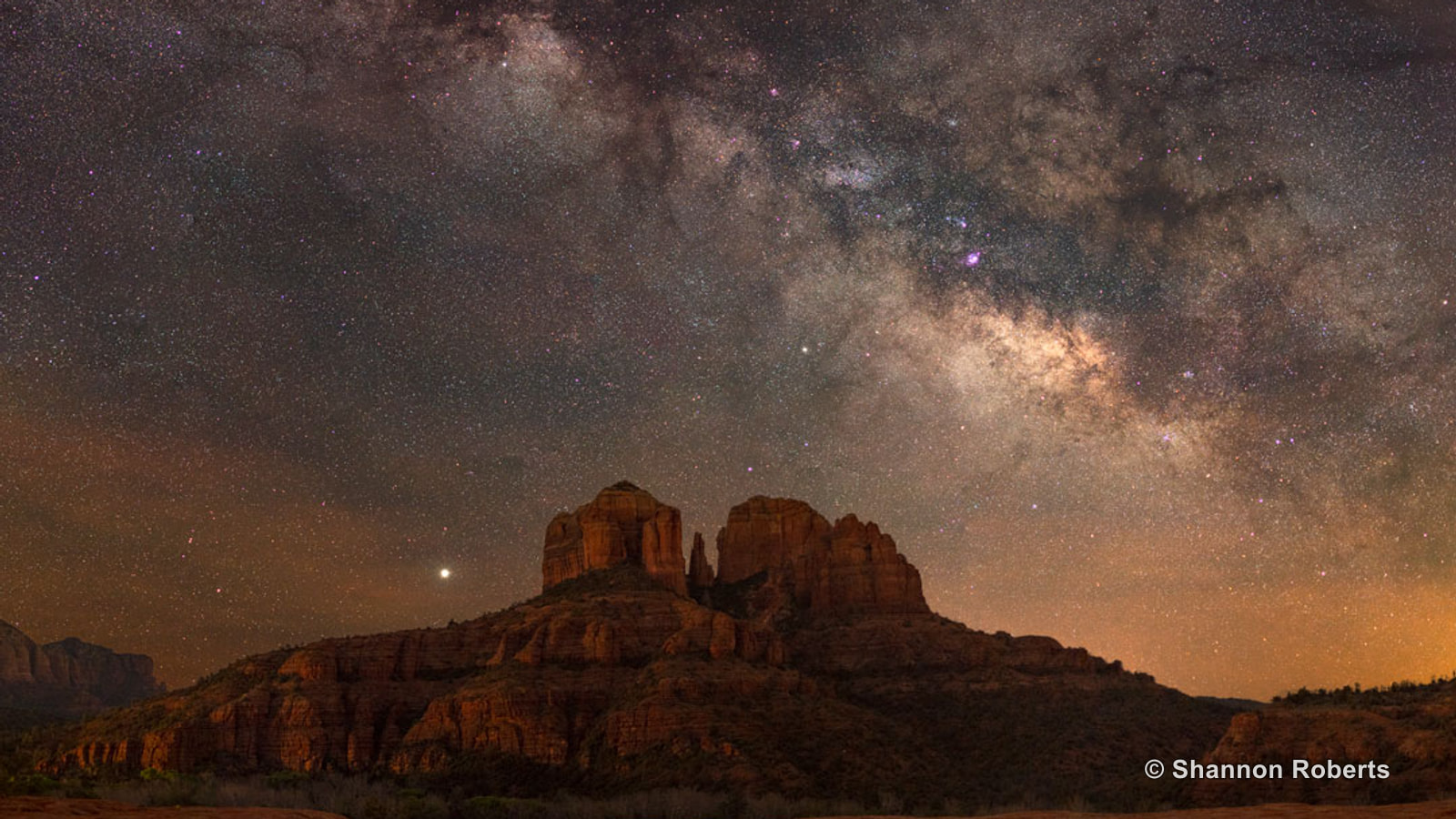
Cover photo: my Milky Way image from Cathedral Rock in Sedona, not a view from one of the hotels. Property information checked October 21, 2026.
Which stay fits your trip?
Backland: my pick for a nature-focused escape near Williams, with selected suites offering a skylight above the bed.
Ambiente: a Sedona stay for travelers who want a rooftop terrace and the option to arrange a private astronomer-led session.
Castle Hot Springs: an adults-only resort northwest of Phoenix for combining a quiet desert setting with hot springs.
These are three different kinds of trips. Choose the evening you want, then choose the room. The best option for you is not automatically the most expensive one.
Backland: the one I keep coming back to
I have stayed at Backland four times. What stands out to me is how removed it feels from both light pollution and the everyday noise that follows us around. The sky is a huge part of it, but the quiet makes the experience feel complete.
The current Backland site lists climate-controlled nature suites with private bathrooms and different room configurations. Its Starview options include skylights. If looking up from bed is the reason you are booking, confirm that your exact room has that feature. It is not something I would leave to an arrival-day surprise.
I would plan this as a stay to enjoy in its own right. Arrive with enough time to settle in, ask the property about the best viewing area, and leave the evening open. An outdoor view will usually give you more sky than looking through glass, even when the skylight is a very fun part of the room.
Ambiente: a rooftop night in Sedona
Ambiente’s atriums offer rooftop terraces, bringing the evening viewing spot into your accommodation experience. The hotel also lists private rooftop stargazing with a professional astronomer, arranged through its concierge.
That makes it worth considering if you want someone to help you understand what you are seeing. Ask about the session cost, timing, weather policy and which room arrangement best fits your plans. A telescope experience should be confirmed separately instead of assumed to come with the room.
Castle Hot Springs: desert quiet and a long soak
Castle Hot Springs is a secluded resort in the Sonoran Desert northwest of Phoenix. Access is for registered overnight guests ages 18 and older. I would put it on the shortlist for a couples getaway where the overall setting and hot springs matter as much as the sky.
It is near Morristown, not Sedona. The resort’s arrival guidance includes seven miles of dirt road and recommends an SUV or truck. Arrange your arrival thoughtfully and ask the team which nighttime viewing options are available during your dates.
Book around the sky, not just the room photos
Moonlight changes the experience. If your goal is faint stars or Milky Way photography, nights near a new moon are generally a better starting point than a full moon. NASA explains why darker, moonless nights help. The Milky Way’s position and visibility also change with the season and hour; a summer photograph is not a promise of a November view.
Check cloud cover near your trip, and give your eyes time to adjust. NASA’s beginner stargazing advice recommends avoiding bright screens and using a red light. Bring warm layers, even if the afternoon felt mild.
Questions I would ask before reserving
Does this exact room include the skylight or terrace shown in the photos?
Where can overnight guests comfortably view the sky after dark?
Are astronomy sessions included, extra, or available only on certain nights?
What happens to a booked astronomy experience if the weather does not cooperate?
What are the road conditions and arrival instructions for my dates?
Do you need a hotel to enjoy Arizona’s dark skies?
No. A special stay makes the evening convenient, but it is not the admission ticket to the universe. My Flagstaff and Sedona stargazing guide covers other ways to plan a night outside. Wherever you go, respect access hours and keep your own lights low.
My favorite upgrade is still time. Enough time to let your eyes adjust, stop checking your phone, and realize the sky has been putting on a very good show all along.