
Northern Arizona Travel Guide · Flagstaff
Visit Wupatki Pueblo with time to learn
This is a living cultural landscape, not simply a dramatic photo stop.
June 28, 2026 · By Shannon Roberts, Northern Arizona local, photographer, filmmaker, and enthusiastic detour-takerWupatki asks visitors to look beyond ruins and understand a place where communities lived, traded, adapted, and remain connected to the landscape today.
Allow 90 minutes to half a day
Curious travelers, families, cultural history, slower itineraries, and people who read the signs instead of sprinting past them
Summer is cooler than the desert below, fall brings aspens and crowds, winter can mean snow and changing roads, and spring weather enjoys keeping everyone humble. Check conditions at Flagstaff’s elevation before leaving.
Shannon’s story
Do not reduce this drive to one pueblo
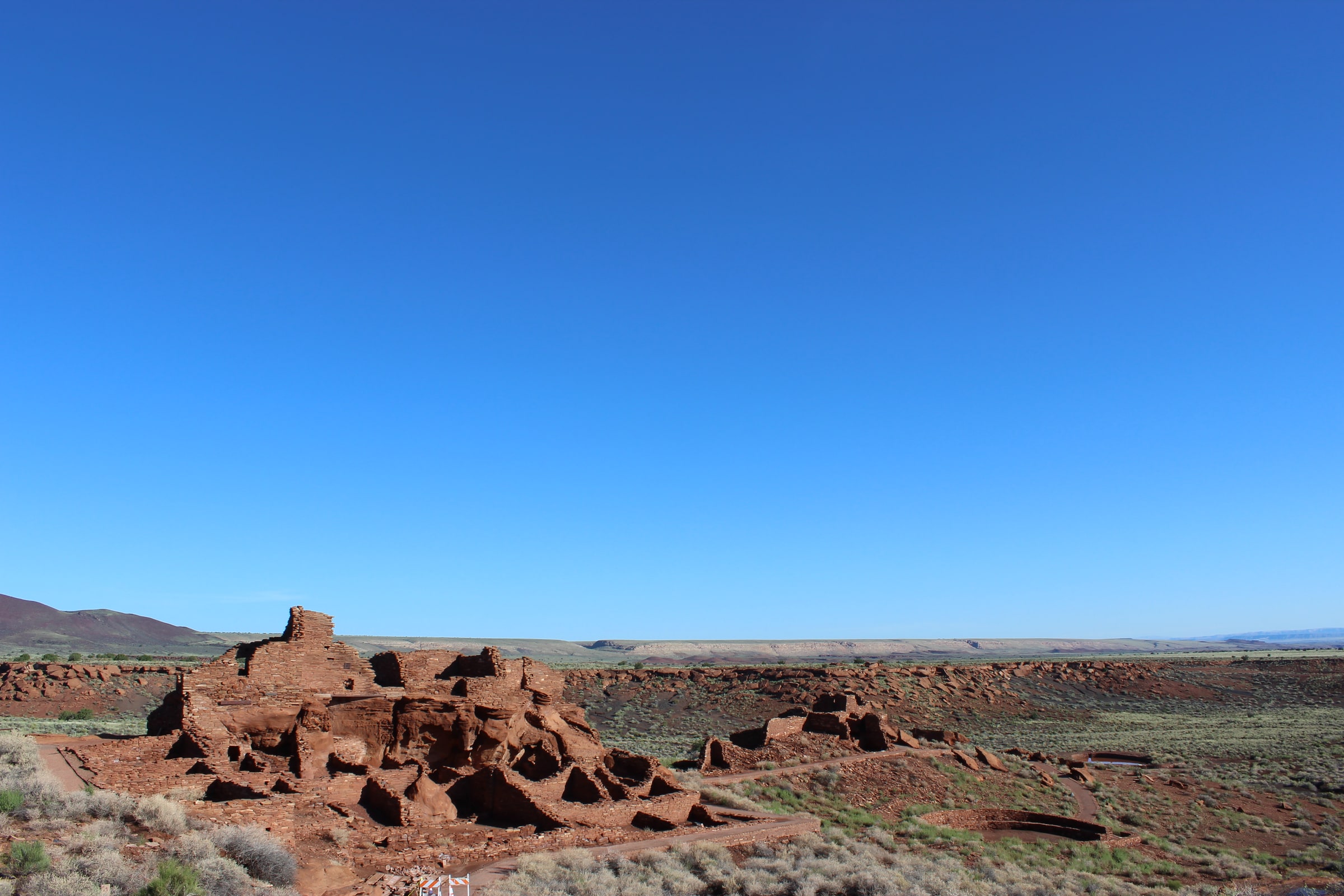
The first time people hear Wupatki, they often picture the large pueblo beside the visitor center. The landscape contains multiple stops and communities, not one photogenic wall. Slow down for Wukoki and the other designated pueblos along the loop. The distance and open desert help the whole settlement story make more sense.
I also love this area after dark. It is extremely dark and the pueblo forms can become remarkable astrophotography foregrounds where night access is legal. That does not mean climbing on cultural resources with a tripod. The photograph is never more important than the place.
I pair Wupatki with Sunset Crater because the geology explains part of what changed human life here. Sunset Crater was removed from the bucket-list checklist because a bucket list needs editing, not because the story became irrelevant.
What you will actually see
Wupatki Pueblo contains more than one hundred rooms, a ballcourt, community room, and a geological blowhole. The broader monument protects multiple pueblos and a cultural landscape connected to Hopi, Zuni, Navajo, Yavapai, Havasupai, Hualapai, and other Indigenous communities today. The preferred language is not “mysteriously abandoned.” People moved, adapted, and remember these places.
How to drive the loop
The paved scenic road connects Wupatki and Sunset Crater Volcano National Monuments. Allow at least three hours for the drive, visitor center, main pueblo, and one or two additional stops; a half-day is better. Fuel, food, water, and shade are limited, so prepare in Flagstaff or Cameron.
Main pueblo trail and accessibility
The main Wupatki Pueblo loop is roughly half a mile. Portions are paved, but grades, wind, heat, and elevation matter. Review current accessibility information and ask staff which overlooks best fit your group. Other pueblo trails vary in surface and distance.
The blowhole and desert weather
The blowhole is a natural opening connected to underground cracks that can exhale or draw air as atmospheric pressure changes. Do not place objects into it. The open desert has little shade and can swing from intense sun to cold wind quickly.
Visit as a guest
Stay on designated paths. Do not sit, stand, or climb on walls; never remove pottery fragments, stones, or plants. Read the Indigenous perspectives in the exhibits and remember that protected architecture is part of a living cultural landscape, not abandoned scenery.
The short version before you leave
Stay on designated paths, do not touch or remove anything, and make time for the visitor information. Check current access and closures before driving the loop.
Go prepared. Follow the rules of the place. Leave with the story, not part of the landscape.
Questions people actually ask
Before this becomes twelve open browser tabs.
How long do you need at Wupatki National Monument?
Allow at least three hours for the scenic loop and main stops. A half-day gives you time for multiple pueblos and Sunset Crater without rushing.
Can you go inside Wupatki Pueblo?
Visitors follow the designated loop through and around parts of the pueblo, but many rooms and walls are closed to protect them. Follow all signs and ranger instructions.
What is the Wupatki blowhole?
It is a natural opening connected to an underground fracture system. Air movement changes with atmospheric pressure, so it may blow outward or draw inward.
Is Wupatki dog friendly?
Pets are restricted on archaeological trails and inside buildings, with limited exceptions for service animals. Check current NPS pet rules before bringing a dog.
Can I visit Wupatki and Sunset Crater together?
Yes. A scenic loop connects them and the volcanic history adds important context to settlement changes. Plan a half-day and check road or fire closures.
Is Wupatki a ruin?
The NPS may use “pueblo” or “archaeological site.” The place remains culturally connected to living Indigenous peoples, so language suggesting it was simply abandoned misses the larger story.
Keep planning here
One stop down. Northern Arizona remains enormous.
Sources checked for this Travel Guide
These sources support factual, historical, and access information.
- National Park Service Wupatki visitor and Indigenous-connections information
- National Park Service scenic-loop guidance
- Shannon’s visits and night-sky work
Hours, fees, roads, water, weather, and closures can change. Confirm time-sensitive conditions with the official operator or land manager before traveling.