
Northern Arizona Travel Guide · Sedona
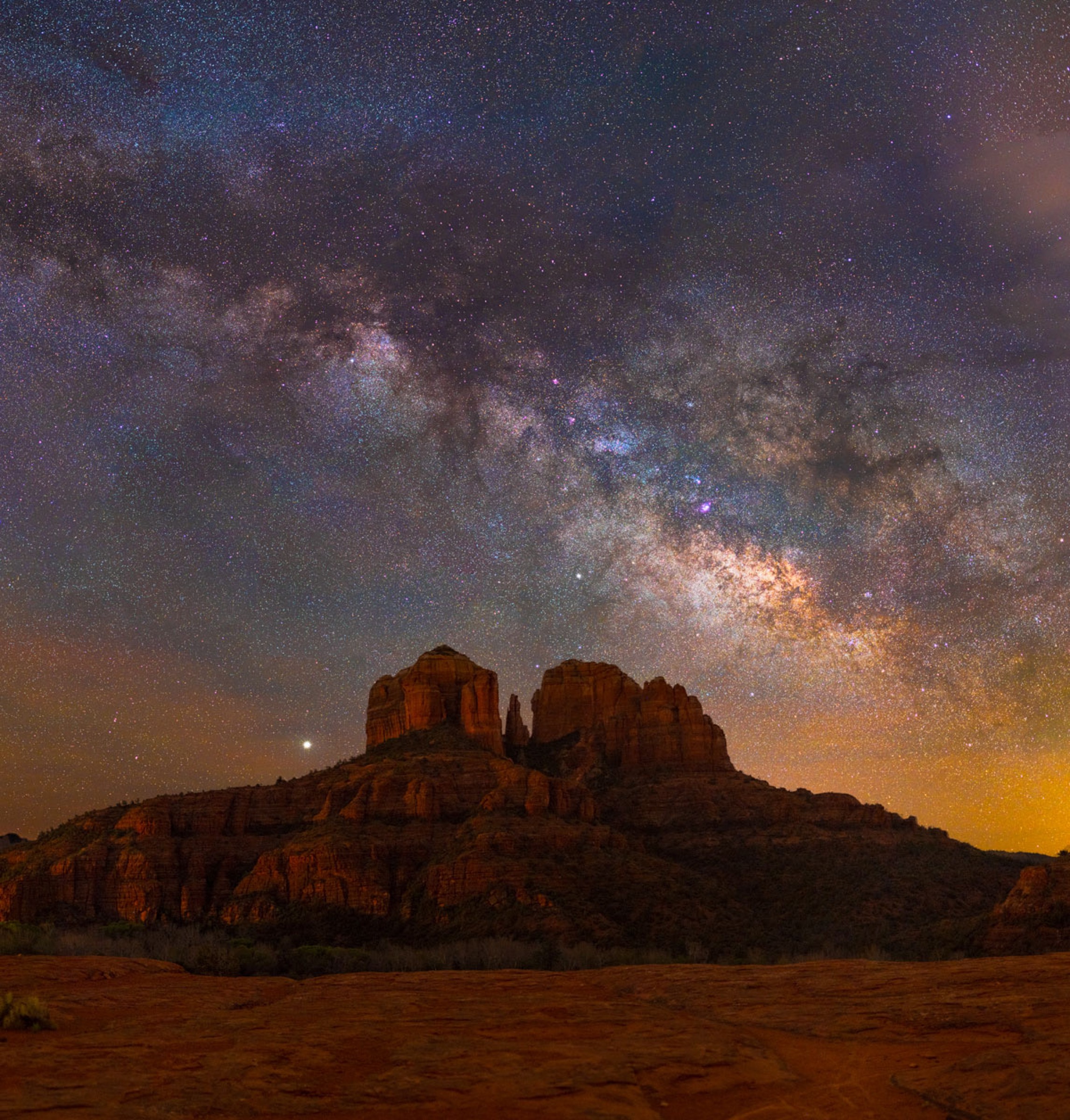
Stargaze from a Sedona dark-sky spot
Bring a layer, use low light, and give your eyes time to adjust.
June 13, 2026 · By Shannon Roberts, Northern Arizona local, photographer, filmmaker, and enthusiastic detour-takerSedona after dark is an entirely different landscape. The rocks disappear into silhouette, the traffic finally stops auditioning for a role, and the sky becomes the main event.
Allow two hours after dark, plus travel time
Stargazers, families, photographers, date nights, and anyone prepared to put the bright phone away for a minute
Go after astronomical twilight, once the sky is fully dark. Check cloud cover, smoke, moon illumination, moonrise, and moonset for your exact date; a bright moon can wash out faint stars but beautifully light the red rocks.
Shannon’s story
The kind of Sedona energy I can actually explain
People talk about Sedona vortexes, energy, and spiritual experiences. For me, stargazing belongs in that conversation. Under a truly dark sky I feel small, grateful, and thankful that I get to see it. That is my response, not a promise about yours. The good part is finding out what the sky does to you.
You do not need to hike miles in the dark. I often use established trailhead areas such as Jordan or Jim Thompson, Courthouse Vista, locations near Bear Mountain and Loy Canyon, or legal pull-offs where night access is allowed. Many Sedona hotels also offer programs or have grounds dark enough for a meaningful look.
If you have only twenty minutes after dinner, drive to the Airport Mesa parking area, step away from direct lights, and look up. Easy counts.
Why Sedona’s sky is different
Sedona became an International Dark Sky Community in 2014. Responsible outdoor lighting helps preserve visibility, but conditions still matter. Clouds, smoke, moonlight, nearby fixtures, and the time your eyes receive to adapt all change what you can see.
Pick the night before the spot
Check cloud cover first, then moonrise, moonset, and illumination. A bright moon is wonderful if you want moonlit red rocks and less helpful if your goal is a dense field of faint stars. Meteor showers do not require a telescope; they require patience, darkness, and usually a much later bedtime than anyone advertises.
A safe, low-effort viewing plan
Choose a legal location before dark. Park completely off the roadway, stay near your vehicle if you do not know the trail, bring a layer and water, and use a red light. Do not illuminate the landscape with high beams for twenty minutes while other people are photographing it. Sky etiquette is mostly regular etiquette with fewer lumens.
What you may see
Constellations and planets change by season. The Milky Way core is most prominent during warmer months and at specific overnight times; winter still offers brilliant stars and distinctive constellations. Give your eyes at least twenty minutes without bright screens before deciding the sky is underperforming.
Phone and camera basics
For a phone, use night mode, brace it against something stable, and lower screen brightness. For a camera, a tripod, wide lens, manual focus, and a starting exposure around ten to twenty seconds can work, but exact settings depend on lens, sky, and desired star movement. Take the photo, then protect enough time to experience the sky without operating a tiny glowing office.
The short version before you leave
Choose a legal nighttime location before dark, check clouds and moonlight, use a red light, and never stop along an unsafe roadway for a spontaneous astronomy emergency.
Go prepared. Follow the rules of the place. Leave with the story, not part of the landscape.
Questions people actually ask
Before this becomes twelve open browser tabs.
Is Sedona good for stargazing?
Yes. Sedona is an International Dark Sky Community, and many areas offer excellent visibility when clouds, smoke, and moonlight cooperate.
Where can I stargaze in Sedona without hiking?
Established trailhead parking areas and Airport Mesa offer low-effort options where current nighttime access allows. Some hotels also provide stargazing programs or dark grounds.
What time is best for stargazing?
After astronomical twilight, when the sky is fully dark. The exact best window depends on clouds and moonrise or moonset, so check conditions for your date.
Can you see the Milky Way in Sedona?
Yes, seasonally and when the core is above the horizon during a dark window. Visibility depends on date, time, clouds, smoke, moonlight, and nearby lighting.
Do I need a telescope?
No. Many of the most satisfying views, including the Milky Way and meteor showers, are visible to the naked eye. Binoculars are a useful optional upgrade.
What should I bring?
Bring a warm layer, water, a red-light headlamp, a chair or blanket where allowed, and a downloaded map. Keep white light and screen brightness low.
Keep planning here
One stop down. Northern Arizona remains enormous.
Sources checked for this Travel Guide
These sources support factual, historical, and access information.
- City of Sedona dark-sky information
- International Dark-Sky Association designation records
- Shannon’s astrophotography experience
Hours, fees, roads, water, weather, and closures can change. Confirm time-sensitive conditions with the official operator or land manager before traveling.